Mastodon Feed
Boosted by jsonstein@masto.deoan.org ("Jeff Sonstein"):
gmkeros.wordpress.com@gmkeros.wordpress.com ("Stuffed Crocodile") wrote:
Write Your Own Fantasy Games For Your Microcomputer
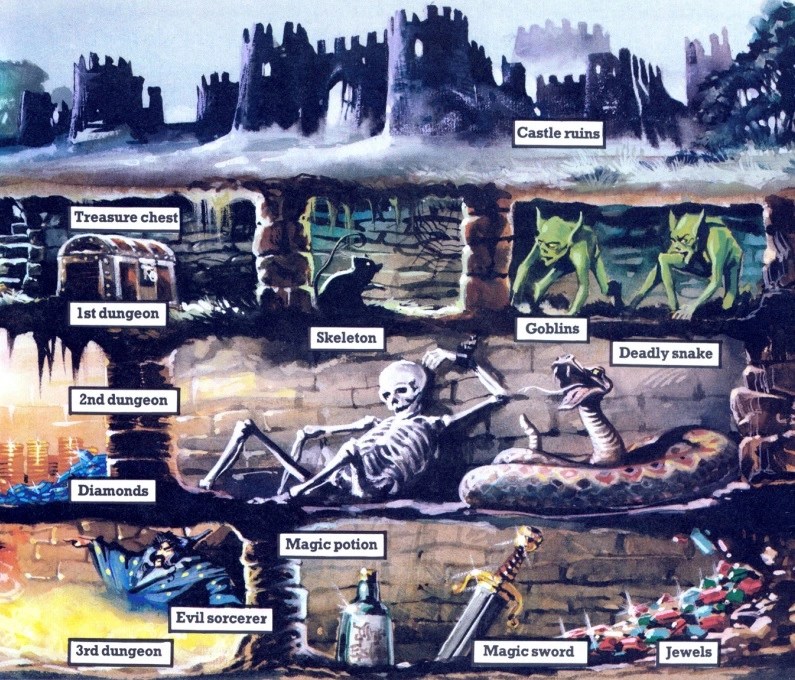
I was searching through some old files on one of my storage disks when I came across this book again: Write Your Own Fantasy Games For Your Microcomputer by Les Howarth and Cheryl Evans, with a program credited to Chris Oxlade, and illustrations by various people including Chris Riddell.
It was part of the series of Usborne Gamewriters’ Guides back in the 80s, which consisted of multiple books like this, Write Your own Adventure Programsm, Computer Spy Games, etc.
If you aren’t aware about this kind of book, the actual main part of it was the program listing in the later half of the book. This kind of book was supposed to teach you programming by… literally having you type in a program command by command. Which was a way to get software out to other people when storage media for it were too expensive to include. These listings were in computer magazines all the time, I even saw a few for character generators and similar stuff in normal TTRPG magazines.
But it also gives you an explanation what those particular bits are supposed to do, and how to deal with the bugs you are certain to encounter when copying the listing into your own machine.
But before that it had to teach you what they mean with Fantasy Game (roleplaying games), what Dungeon and Dragons (TM) is, and how such a game is played, before then venturing into how they intend to translate this into a game where you are both Dungeon Master and player.
In the end this creates a sort of rogue-like.
But I find some of the implications of the text fascinating. For one it was so early in the development of CRPGs that they don’t talk about this being a game or role-playing game (in fact that term is never used), you are creating a fantasy game like DnD instead, and you are using the computer to run it. I know it’s just a small difference, but this doesn’t come from a position of consuming the game, you are CREATING it instead. It starts from the assumption that you are using this as a framework to do your own adventuring environment that is basically an extension of a tabletop game into computer space. A later chapter goes into explaining how to extend this program with your own creations. In other words, you are not supposed to be a programmer with this, you are a Dungeon Master who just happens to use the computer as a medium. Which I find a fascinating approach.
I also found this bit interesting:
You should name the document of your game rules and conditions your Book of Lore as this is the common name fantasy gamers use to describe this.
Book of Lore.
Now I can’t say I never encountered the name before, but I find the idea that this is a specific term that fantasy roleplayers use to describe… well, what exactly? A campaign Bible I guess. Maybe I should indeed call mine Books of Lore from now on.
Yes I know that lore has come to mean something else by now, but this was written in 1981, maybe this was actually a term a specific subset of gamers used.
By the way, according to the back of the book this book cost £2.25 (in 2026 money: £9.75) when it was published, but according to the inside cover you could also have them send the program on cassette and save yourself the typing… for £5.99 (2024: £22.11)
Which would make the whole book pointless I guess. But computer stuff was expensive back then.
If you are interested in this, the book has been out of print for decades now, but Usborne made this and others available for free on their website a few years ago.
edit: had to change the link to the Usborne site, they changed their site structure a while ago
#C64 #programListing #programming #retroGaming #retrocomputing #retrogaming #ttrpg