Mother Jones: Posts

Mother Jones

The National Guard Soldier Pissed About Trump’s DC Takeover

Thanks to President Donald Trump, the residents of Washington, DC, are now safe from the horrors of fallen leaves and errant litter. Otherwise, as the US commander in chief threatens to send National Guard troops to Chicago, the usefulness of Trump’s DC deployment has been doubtful.

“They just see us as little toy soldiers to put on the street to show some muscle.”

On August 11, Trump declared DC’s violent crime rate higher than some of “the worst places on Earth”—likening the capital to Baghdad, Iraq, and Bogotá, Colombia. In fact, DC’s violent crime rate is at a 30-year low. No matter: In a show of fealty to Trump, six Republican states sent troops to DC.

So far, their work has not gone exactly as planned. Last week, the soldiers deployed to fight a “crime emergency” instead found themselves completing “beautification” duties on Capitol Hill and patrolling Krispy Kremes. Users on the r/NationalGuard subreddit were quick to give their colleagues a new nickname: National Guardeners.

The joke shows an undercurrent of dissent within the Guard after Trump unleashed members on major American cities. Alex, a National Guard recruiterfrom one of the states that sent troops to DC who requested anonymity to speak freely, told Mother Jones that the DC mission has deterred potential recruits and pushed already-disillusioned soldiers to their breaking points.

“I think people have hit their limit. This is an encroachment on everything we signed up for, and it feels like a violation,” said Alex. “They just see us as little toy soldiers to put on the street to show some muscle. There’s no clear mission or understanding of that mission.”

Trump’s moves have also drained budgets. Experts estimate that the DC deployment is costing roughly $1 million a day. The recent Los Angeles deployment cost $134 million. The lack of money, Alex said, puts retirement for some members at risk.

In order to receive retirement benefits, National Guardsmen generally need to acquire at least 20 “good years” of service. This means committing some time to the National Guard each month. Often, this takes the form of practice drills. But, shortly after the DC deployment, Alex said, they received instructions not to drill for the rest of the fiscal year (which ends September 30).

“It generally gets like this at the end of the fiscal year, money’s always tight, but not to the point where I’m not able to drill,” Alex said. Without additional drills, some will not be able to log a “good year” toward retirement. Alex put it succinctly: “I’m missing work for the army because the state ran out of money because they decided to send military police to DC.”

National Guard morale already fell after the deployment to LA, but it has sunk to new depths after the DC call to arms. Increasingly, Alex said, soldiers are worried that they may be called upon by the current administration to commit unethical acts. On September 2, a federal judge ruled that Trump had illegally used armed military troops to squash civilian protests in June. (The Department of Defense did not respond to a request for comment.)

Like in DC, while the 40-day military occupation of LA was a chilling show of force, many troops largely sat around doing nothing. Alex said Guardsmen have been frustrated to see money spent on “performative” deployments in LA and DC, a military birthday parade that “nobody cared about,” and an anti-woke campaign to change back military base names—all while “soldiers’ barracks are falling apart” and the Department of Veterans Affairs is cutting personnel. “They don’t feed these soldiers anything worth a damn, the infrastructure is dilapidated, and they don’t pay them enough,” Alex said.

On social media, the mood is dour, too. One user on r/NationalGuard posted a text alert allegedlyfrom the Department of Defense’s Public Affairs division, encouraging “Capital Guardians” to use the hashtag #DCisMe to participate in a “Picture of the Day Contest.” (“Lamest activation ever,” someone commented.) On Instagram, military meme pages parodied the request, posting memes making fun of the DC takeover with the hashtag #DCisMe.

View this post on Instagram

A post shared by The Box Wizard (@the_box_wizard)

On Reddit, underneath a video reposted from r/Army and captioned, “[Joint Task Force-DC] soliders [sic] now taking landscaping orders from men in suits,” one user said, “Sorry. As a retired NG officer, this makes me sick. We don’t even have Soldiers doing routine grounds maintenance on Army posts, and yet, we’re doing this in public now?” Another user noted, “It was humiliating enough going to the Inauguration to assist the police only to end up standing around on streets wearing absolutely nothing but road guard vests. It’d be straight up demoralizing to be called up to just pick up trash and rake leaves.” One person asked, sarcastically, “Why are [National Guard] retention numbers so low!?” (Mother Jones was not able to independently verify these posters were members of the National Guard.)

Amid a years-long military recruiting crisis, Trump has repeatedly claimed that Biden-era diversity, equity, and inclusion programs were to blame for the shortfalls, and he recently took credit for an enlistment bump that began before his reelection. But in the National Guard, Alex said, it is the current administration that has proven particularly odious to potential new recruits. In particular, Defense Secretary Pete Hegseth, who once paid $50,000 to settle a sexual assault accusation and declared that women should not be in combat roles.

“We are losing candidates left and right,” said Alex. “Certainly people are watching this and making decisions—not only to not join, but plenty of people within our ranks who are pushing toward retirement are deciding they’re done, and they are leaving before it gets too bad.”

Continue Reading…

Mother Jones

New York Sues Anti-Immigration Charity for Multimillion-Dollar Misuse of Funds

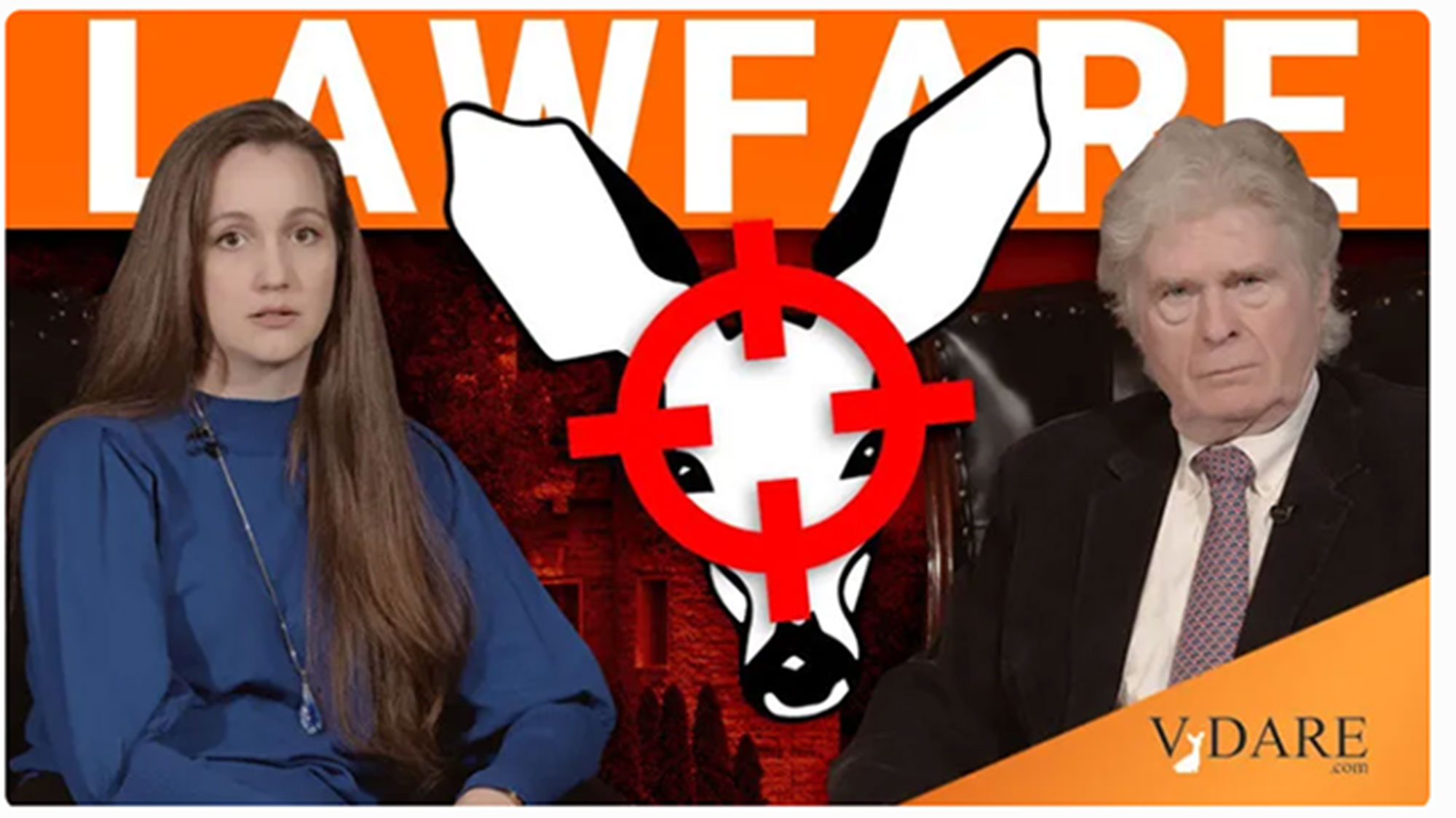
Peter Brimelow, founder of the vehemently anti-immigration website VDARE.com, is being persecuted.

That’s what he’s been telling followers, anyway. In a video posted on X last July, Brimelow announced his resignation and the suspension of VDARE, claiming the organization “has been murdered by New York State Attorney General Letitia James,” who “is quite obviously aiming at suppressing our speech.”

PETER BRIMELOW: Why We’ve Suspended VDARE and I’ve Resigned After 25 Years pic.twitter.com/tnWSz3L0xs

— VDARE (@vdare) July 23, 2024

One might be forgiven for finding Brimelow’s speech odious: “Hispanics do specialize in rape, particularly of children. They’re very prone to it, compared to other groups,” he claimed, according to the Southern Poverty Law Center, while speaking at a 2017conference in reference to Donald Trump’s claim that Mexico was sending rapists across the southern border. (VDARE once sued the New York Times for defamation—unsuccessfully—for reporting, among other things, that the SPLC had designated VDARE a “hate group” based on its rhetoric and Brimelow’s ties to white nationalists.)

But the lawsuit James’ office filed on Wednesday, after more than three years of investigation and court skirmishes over the AG’s unfulfilled requests for information, doesn’t dwell on Brimelow’s ideology. Rather, it accuses him and his wife, Lydia Brimelow, along with VDARE Foundation—the tax-exempt nonprofit that has supported the website (and the couple’s legal defense fund)—of misusing charitable funds.

The lawsuit claims the Brimelows—who have been championed by Trumpworld figures including Tucker Carlson, Ed Martin, and Stephen Miller—improperly funneled more than $2 million worth of VDARE’s assets to entities controlled by the Brimelows or their family members. These include the Berkeley Castle Foundation, which Lydia established in West Virginia in 2000, and a now-defunct Connecticut company, Happy Penguins, that the couple owned. (Though originally based in Connecticut, and more recently West Virginia, VDARE is registered as a New York nonprofit.)

The Brimelows have also, the suit alleges, repeatedly failed to submit the state financial filings required of all nonprofits—or submitted untruthful ones. Finally, the AG’s office accuses VDARE, which collected nearly $15 million in tax-deductible contributions from 2019 through 2023, of soliciting donations after declaring itself inoperative last year.

To that point, an online fundraising campaign launched by Lydia Brimelow on the donation portal GiveSendGo—which describes James as “a lawless political activist bent on destroying Donald Trump”—shows $52,000 raised on a $100,000 goal, including more than $2,000 in the past month. (“Let’s keep our culture,” one donor, who gave $200, wrote in the comments section.) The funds “will be received by VDARE Foundation,” the page promises. “Please donate today to help VDARE.com defend ourselves from this existential threat.”

Lydia and Peter Brimelow in an image from their VDARE fundraising campaign page.

As I’ve written previously, the rules determining what qualifies as a tax-exempt (thus taxpayer-subsidized) charity in America are wildly permissive—VDARE being just one example—as are the laws governing foundations and donor-advised funds. But state and federal governments do place restrictions on nonprofit corporate governance to discourage founders from enriching themselves. “VDARE’s board was limited only to the Brimelows, their family members, and close associates, a structure that enabled years of unchecked self-dealing,” James’ office writes in a press release announcing the lawsuit.

In 2020, according to the release, the Brimelows used $1.4 million from VDARE’s coffers to purchase a castle in Berkeley Springs, West Virginia. Officially, it was to host the charity’s offices and conferences, “but the Brimelows promptly moved their family in and then orchestrated a series of transactions transferring ownership of the property to companies they owned or controlled.” The AG’s statement goes on to claim that “these arrangements, structured by Lydia Brimelow’s father, were rubber-stamped by a board dominated by the Brimelows.”

The couple’s next move, the lawsuit alleges, was to create what’s known as a leaseback scheme, wherein VDARE paid rent to the Brimelows’ other entities to use the castle and property. These payments, along with loans from VDARE to another company Lydia created, called BBB LLC, enabled the Brimelows to “extract hundreds of thousands of dollars from VDARE,” the lawsuit alleges, while the charity’s stacked board rendered its review of any such transactions “meaningless.”

The AG’s office confirmed to me that its investigation commenced in June 2022 after its lawyers became aware of reports raising questions about the group’s 2020 purchase of the Berkeley Springs Castle, which has divided the local community. When its lawyers then looked at public records related to the transactions, they came across what they felt was strong evidence of self-dealing—that’s the unlawful use of a public charity to enrich its owners or officers.

The Brimelows tried to thwart the investigation, the lawsuit alleges, by ignoring subpoenas, withholding records, and forcing James’ office to go to court to obtain even basic documents: “VDARE has been held in contempt of court twice, owes tens of thousands of dollars in unpaid fines…and still refuses to comply with court orders,” the AG’s statement reads.

On their fundraising page, the Brimelows cast the AG’s investigation as political retribution: “After 25 years of battling Cancel Culture to publish nonprofit journalism on the negative effects of mass immigration in defense of the Historic American Nation, VDARE.com is faced with a crippling pincer attack: overwhelming legal costs AND the canceling of our credit card processing.”

Yet as legal scrutiny increased, the AG further alleges, the Brimelows accelerated their efforts to shift assets away from VDARE by increasing the monthly rent on the castle from $6,000 to $33,000, releasing Brimelow-controlled entities from more than $1 million in mortgage obligations, and transferring VDARE’s remaining castle shares to “a for-profit company believed to be controlled by Lydia Brimelow’s father.”

“Charities are intended to serve the public, not to bankroll castles or pad personal fortunes,” James said in a statement. (Mother Jones has reached out to a lawyer representing VDARE, seeking the group’s response to the allegations.)

In an echo of the successful legal action James [filed in 2018][14] against the Donald J. Trump Foundation, the VDARE lawsuit seeks restitution and penalties for the alleged charitable abuses and the rescission of any unlawful transactions—including transfer of the castle’s ownership. It also calls for the official dissolution of VDARE Foundation and asks the court to permanently bar the Brimelows—as the New York Supreme Court barred Trump and his three grown children—from serving as officers, directors, or trustees of any New York charity or soliciting charitable contributions in New York state. A receiver also would have to be appointed by the court to disburse VDARE’s remaining assets—just $150,000 at the time Brimelow announced that his website was calling it quits—to “legitimate charities.”

Although the courts have shown little patience for the Brimelows’ claims of martyrdom, the couple found a sympathetic ear in Tucker Carlson, who shares their embrace of the [Great Replacement Theory][15], the notion that white Americans—real Americans—are being supplanted by people of color in a scheme orchestrated by “globalist” elites.

Mass immigration is completely destroying our country. Why is no one doing anything about it? Because they’re afraid of ending up like Lydia Brimelow. [pic.twitter.com/B5B0bh6t5O][16]

— Tucker Carlson (@TuckerCarlson) [February 20, 2024][17]

For Trump admirers who come under legal scrutiny, it’s de rigeur to cast their prosecution as political retribution—see January 6. This grievance has been a recurring element of Trump’s playbook, even as his own Justice Department actually—and openly—targets his foes for their misdeeds, real or imagined. But nobody has produced evidence of Letitia James doing so. In the real America, sometimes people just do questionable things and end up accused of crimes.

[14]: http://In an echo of a lawsuit the AG filed in in 2018 against the Donald J. Trump Foundation, [15]: https://www.motherjones.com/politics/2023/01/trump-jan-january-6-insurrection-big-lie-white-supremacy-confederate/ [16]: https://t.co/B5B0bh6t5O [17]: https://twitter.com/TuckerCarlson/status/1760075607927648419?ref%5Fsrc=twsrc%5Etfw

Continue Reading…

Mother Jones

On Trump’s Orders, Missouri Republicans Plan to Gerrymander a Black Lawmaker Out of Office

Donald Trump’s plan to rig the 2026 midterms through a series of unprecedented mid-decade gerrymanders shifted from Texas to Missouri on Wednesday, as the GOP-controlled Missouri legislature began a special session to pass a new redistricting map that would eliminate one of two Democrat-held US House districts and net Republicans an additional seat. If successful, the new map would give Republicans 90 percent of seats in a state Trump carried with 58 percent of the vote in 2024.

The Republican leader of the state senate said the plan was designed “to be sure Missouri’s representation matches Missouri’s Christian conservative majority.”

The map targets the seat of Democratic Rep. Emanuel Cleaver, one of two Black members of the state’s congressional delegation, by stretching his Kansas City-based district 200 miles east into red, rural counties that have little in common with the urban areas he’s represented for 20 years in Congress. Cleaver’s hometown of Kansas City, where he served as mayor before joining the US House, would be split into three districts to dilute Democratic voting strength. According to The Downballot, Cleaver’s district, which he won by twenty-four points in 2024, would now favor Trump by 18 points.

If successful, the new map would give Republicans 90 percent of seats in a state Trump carried with 58 percent of the vote in 2024.

“President Trump’s unprecedented directive to redraw our maps in the middle of the decade and without an updated census is not an act of democracy—it is an unconstitutional attack against it,” Cleaver said in a statement. “This attempt to gerrymander Missouri will not simply change district lines, it will silence voices. It will deny representation. It will tell the people of Missouri that their lawmakers no longer wish to earn their vote, that elections are predetermined by the power brokers in Washington, and that politicians—not the people—will decide the outcome.”

After pressuring Texas to pass a new congressional map that is expected to net Republicans five new seats, Trump is now lobbying legislators state by state—much like he attempted to overturn the 2020 election— in an outlandish bid to prevent Democrats from retaking the House and investigating his administration. Even if California approves a new map that would offset Texas’s gains, Republicans believe they can net up to seven additional seats in a gerrymandering arms race, making it much tougher for Democrats to turn Trump’s unpopularity into a wave election. “Trump made the demand and all the Republicans folded,” says Sean Soendker Nicholson, a Democratic political consultant who’s worked on nonpartisan redistricting campaigns in Missouri for many years. “This would be the most extreme Missouri gerrymander since the Civil War.”

Gerrymandering is not the only way Missouri Republicans are attacking democratic norms. Missouri Republican Gov. Mike Kehoe also asked lawmakers to severely restrict the state’s ballot initiative process after Missouri voters passed a slew of progressive policies in recent years, including redistricting reform, paid sick leave, a higher minimum wage, Marijuana legalization, Medicaid expansion, and a constitutional right to an abortion.

Missouri Republicans are trying to predetermine election outcomes through extreme gerrymandering while taking away voters’ ability to do anything about it.

Instead of needing a simple majority to pass a citizen-led initiative, Kehoe’s proposal would require a majority of support in each of the state’s congressional districts (which the legislature is currently gerrymandering). That would allow 50.1 percent of voters in one district to thwart the will of a majority of the state’s voters overall. “You could get 90 percent of the vote to pass a constitutional amendment and it still wouldn’t pass,” says Nicholson. “It’s minority rule on steroids. It would allow any part of the state to veto something supported by the rest of the state.” The plan would still need to be approved by the state’s voters, likely in November 2026.

It’s telling that the gerrymandering of congressional districts and the gerrymandering of the ballot initiative process are happening at the same time. Missouri Republicans are trying to predetermine election outcomes through extreme gerrymandering while taking away voters’ ability to do anything about it.

Nicholson predicts these efforts will backfire, however. He says the Missouri courts will likely reject the mid-decade gerrymander because the Missouri Constitution states that redistricting must follow the decennial census. And he believes the state’s voters will oppose efforts to undercut the ballot initiative process.

“Republicans are pulling out all the shenanigans,” he says. “People will see through what they’re trying to do.”

Continue Reading…

Mother Jones

Being Black in America Almost Killed Me Part 1

Pulitzer Prize-winning journalist Trymaine Lee was in the middle of writing his first book when the unthinkable happened. At 38, a massive heart attack nearly took his life. That near-death experience forced him to reckon with the toll his reporting has taken on his life, including the years he’s spent chronicling gun violence involving Black men in America, as well as his own family’s history marred by slavery, lynching, and even murder.

“What I was feeling was death,” Lee says of his heart attack. “And that moment changed the book certainly, changed my life, but changed the way I view the violence that I had been writing about. I had been writing about bullets. But this blood clot in my heart was just as violent.”

On this week’s episode of More To The Story, Lee sits down with host Al Letson for part 1 of a very personal conversation about the moment Lee thought he might be dying, the many challenges of being a Black journalist in America, and how his brush with death redirected the focus of his new book, A Thousand Ways to Die: The True Cost of Violence on Black Life in America.

This following interview was edited for length and clarity. More To The Story transcripts are produced by a third-party transcription service and may contain errors.

Al Letson: So this is your first book. I should say that as a journalist, you’ve been on this beat for a while. Obviously we know each other. I’ve been following your work for a minute, so how did it turn into this book?

Trymaine Lee: No. The earliest seeds of this book were planted when I was just an intern at the Philadelphia Daily News in 2003. I was covering a case of a young brother who was 17, 18 years old, and he got shot in the back of the neck during a robbery. So some other guys tried to rob him for his Allen Iverson jersey. They ended up shooting him and he ended up being paralyzed. And I found my way into the hospital and this brother, despite being a quadriplegic, he couldn’t feel anything from the neck down, was so hopeful and so optimistic, and he told me that he had dreams about walking again and he’s like this hopeful bright light in the midst of what was clearly like a very dark moment for him and his family. But as he’s talking, I looked across his bed and I see his mother there, her eyes welling with tears and both realized that he would never walk again. And then she started to tell the story of what it would take to get him home. She said, “We need a new ramp. We need an ambulance, a van. We need a wheelchair. We need new outlets.” And they’re just a poor family from North Philly. And this idea of the great cost. Obviously he lost his mobility, he lost a certain kind of future, but also there was this financial cost.

And so I started to think about this idea of nobody cares about that young brother or young brothers like him, but maybe you care that every time a bullet hits flesh, we’re all paying a price somehow some way in a literal dollar amount. And so I had this idea that I was calling Million Dollar Bullets, and so I had Million Dollar Bullets in my head and I pitched it. Everywhere I worked I was trying to pitch this story and I just couldn’t get it done. Until many years later in 2015, a book agent had approached me and said, “Listen, if there’s ever anything you want to do, come talk to me.” And so I pitched the idea and then it just made sense. The timing was right. It was right after Trayvon and Michael Brown, and so we were grappling with how violence is heaped upon young black men in particular, and there was all this gun violence and Freddie Gray, all this stuff was happening and it just felt like it was the right time. Now the book changed dramatically from those early seeds, but that was the beginning.

I’m listening to it to the way you describe it, and it broke my heart. Literally we’re in this interview and I’m trying to piece my heart back together because it is just so sad to me that we as journalists have to think about angles to make people have empathy for, in this case specifically for young black people. We have to think of an angle and say to you, well, this bullet economically costs you money and maybe you will care more about the economics of this bullet and want to stop this stuff because clearly you don’t care about the people that are being impacted.

That’s right. This idea … And you and I both know this well, the gut-wrenching exercise of humanizing our people, humanizing our people. Finding ways where other people, white people, white society might connect, might have some compassion for the violence that we experience every day, the literal violence, but also the systemic violence that keeps this whole thing together. It’s a terrible dance we have to do, but we have to do that because things are as they are, not as we want them to be.

Right. Absolutely. That’s the work itself. It is what it is. And for people called to do it, that’s just the burden you have to carry. But still sometimes you just pull back a little bit and it’s like, “Wow. I have to make an economic case in order for this to matter to the general public.” Which is just wild to me. So you’re putting this book together, it’s your passion project and you’ve been working hard on it, and right after you turned in your first draft, life took a turn that you just did not see.

At the age of 38, I had a heart attack eight years ago this past July, and it was one of those moments where in the midst of it actually happening, I wasn’t clear it was a heart attack, but I was clear my life felt like it was ending in that moment. For a few days, walking to the train … I live in New York and I was walking to the train and I feel a little pressure in my chest and I thought it was one of those times where I was just a little more out of shape than normal. I’m a former athlete and I usually stay in shape, but it was one of those times where I had been out the gym for a while, and so I didn’t think much of it.

And then the day of the heart attack earlier that day, I went to have coffee with a friend of mine at work and I walked down the steps to meet her and I felt like I was going to pass out. And so I said, “I’m going to go to the clinic at 30 Rock at NBC just to get checked out.” And so I go in there and they listen to my heart and they put a little EKG thing on me and they said, “You know what, the left side of your heart is a little enlarged. At some point you should go see someone. A cardiologist. But it’s not like you’re going to go home tonight and drop dead.” Verbatim.

Wow.

I’m not going to drop dead. Then later that night I go home and my wife was cleaning the bedroom and so I was on the sofa sleeping and she woke me up and I went to the bedroom three minutes after I laid down this enormous pressure in my chest. The world was spinning, cold sweat, nausea. It felt like my entire body was breaking down, and in fact what I was feeling was death. I had a blood clot in my left anterior descending artery that was starving my heart. And that moment changed the book certainly, changed my life, but changed the way I viewed the violence that I had been writing about. I had been writing about bullets, but this blood clot lodged in my heart, lodged in my artery was just as violent.

Before we go to the book, can you just talk to me about the weight of the heart attack and how it played out with your family. I just want to hear about the personal journey through that. So we’re at that age where … I was talking to a friend of mine recently and I was like, “We’re at that age where if you have kids, they’re still needing your guidance. If you have parents, they now need your guidance. Work is crazy, the economy is going nuts, you’re feeling crunched and you’re just trying to get through the best you can, and then something like this happens.” I’m sure it has to change your perspective about life.

It sounds cliche to think that in that moment I was thinking about everything that I would miss. My daughter, who was six years old at the time, was this beautiful little inquisitive girl who is like my buddy to this day. She’s turning 13 this summer and to think about not …

Yeah, man. Take your time.

To think about not being able to walk her to school. The science project. She wants to be a journalist like us. So talking about the five W’s and having little conversations with her and seeing that she’s beginning to piece an understanding together and that I would miss that. It brought me to my knees in so many ways, but it also coming out of that, that I did survive, that I did live, it was an opportunity to live more fully and more honestly. And so in the beginning it was like, “You know what, let me get physically right because it’s going to take more than that to get me.” Definitely going to have to hawk me down.

Absolutely. Absolutely.

I’ve been through enough. I said, “You know what, I’m getting on this bike.” I started to meditate. I started to really be just mindful. But it also forced me to engage with a weight that I had not fully unpacked that I was carrying because my six-year-old daughter was asking me tough questions. How and why? And with no family history, no high blood pressure, no high cholesterol I had the misfortune of some soft plaque just breaking off and the clot filled this place. But there was another weight on my heart that I had never fully engaged with. As a journalist for my entire career operating on the edge of death and survival, black death and survival in particular, and a family history packed with early death and violence I had to engage with that in a way that I had never expected to fully. And so again, re-engaging with how I’m living, the idea idea of mortality also though.

There was a moment was freeing in a way that though every night for years I went to sleep not knowing if I would wake up. And that was scary a little bit because it was like I started traveling again for work and I was like, “I don’t want to die in this hotel room.” Or if my wife had to go to work, I don’t want to die, my daughter comes in the room and finds me. That was one side. But the other side was this clarity that we know tomorrow’s not promised, but it truly is not promised. So how are we going to live? After that wave of a few years, I can honestly say that I haven’t experienced stress in the way I understood it before. I ain’t worried about nothing now. I’m really truly not. Come on now. So I feel free of some way where it’s like, man, it’s going to come at some point hopefully far down the road, so I’m going to do everything I want to do. Man, I’ll be fishing every chance I get. I’m chilling. I’m going to Martha’s Vineyard right now. Last year was my first year. I ain’t grow up with nobody going to Martha’s Vineyard. Give me the finger sandwiches.

You going do it.

How you pronounce this? Let me get some of that please. So as scary as things have been, honestly, there is a freedom, and I think in the reshaping of my life and the reshaping of my understanding of life and death and the reshaping of the book, there is something … I think clarity is the word. There’s a clarity now, man. With the story I was trying to tell in my life.

A filmmaker that I know has a movie. It’s a movie, but it’s like four hours long. It was on PBS. But the title of the movie, it was based off an African proverb That was, you never know how alive you are until there’s a lion in the room.

That’s right.

When I go through stuff … Recently, one of my kids was really sick and it was really scary and he was in the hospital for almost four months. And that saying, I felt it. I felt it so deep. I understood it before, but when you are sitting in the room and you feel like death is on the other side you know there’s a lion in this room, and I got to squeeze life and get everything I possibly can out of it because we are not promised tomorrow. It is like you could walk outside now and it all be gone, or the people you love be gone and what did you do in the meantime?

And we are not promised the nightfall. We are not promised that.

No. So one more question about the family stuff. How did you explain this to your daughter? Because six is that age where they are beginning to understand life, but I don’t know if they truly have an understanding of death at that part. They understand life in the terms of life is good, mom and dad are here, we get to have fun, we do this, we do that. A little bit of sense of self maybe, but the idea that it could all go away is so foreign at that age.

Well, two things. I think one, I don’t think most adults understand mortality because we don’t live as if it’s going to end. We don’t. And even when you have a proximity or a proximal relationship to death, you’ve experienced it through people and that’s a certain kind of pain of that loss. It’s hard for us to understand that we might not be here one day. That’s harder to fully conceptualize. And before I get to my daughter, I want to say one thing that was a moment. So the whole time … I just want to backtrack a little bit.

Yeah. Please.

So the heart attack happens and for about 10 minutes it feels like I’m separating from my physical form. This crazy … I can’t even explain how it felt, but I’m separating myself. And then it passes. Then the ambulance comes, the MTs, they take my vitals, they say, “Everything looks pretty good to us. Do you want to go to the hospital?” And I said, “My daughter has camp in the morning.” And this is how men … This how we … I said, “My daughter has camp in the morning. My wife has a trip. I’ll wait into the morning to get to the hospital. I don’t want to inconvenience my family. You’ve been in the hospital. I don’t want to have my baby in the hospital and my wife.” And so all night long I’m tossing and turning on the sofa with a 98% blockage in the main artery giving my heart blood.
The next day we dropped my daughter off at camp and I go into urgent care. I don’t know why I’m going to urgent care, but I’m doubled over across the street. Bro, I tell them what’s going on. They said, “Yo, go to the emergency room now. What are you doing here? Get there.” So we get there and they’re still like, “You look so young.” They’re not sure what’s going on. After seven or eight hours, they finally take a blood test and find troponin, which is a compound or protein that’s released if you have heart damage. They said, “We think you might’ve had a heart attack. We’re going to prep you for the cath lab tomorrow.” So mind you, I still haven’t gotten in the cath lab yet. So they’re like tomorrow. And then fortunately my cardiologist, who is my cardiologist today said, “You know what, let’s get you in there now.” And so I’m on the table, there’s a big screen over my shoulder and they’re threading whatever it is through my wrist in the vein. And he’s tooling around in there and he pulls it out. He said, “You are a very lucky man.” He said, “You almost had a complete blockage. I put two stents in there to clear it.” And he said, “Where’s your wife? Let’s go talk to her.”

And in that moment I started to smile because I was like, “Yo, your boy was almost out here.” I was so happy because I had had a heart attack. I survived it though. So I’m actually feeling pretty good, literally dodged one. But then the next day … And there’s another one of those moments that I get choked up thinking about, it’s my wife, my brother, my sister, my mother, and we’re all in the room. And I made a joke to my wife. I said, “Man, you almost became a thousandaire.” And then I was like, she almost had to collect death benefits from me, and I broke down sobbing like a baby in my mother’s arms because the reality was, again, all of that crashing down on you, how close of a call that really was. And then my family would have to collect benefits on me.

So I’m in the midst of all that, and I still have this precious, beautiful little girl, this little smart little girl who she had been watching me in Ferguson, Missouri. She had been watching me in Baltimore. So she’s attuned and we have real honest conversations, as honest as you can possibly be with a six-year-old. And I was trying to explain that what happened to daddy’s artery is like a pipe with some gunk got stopped up and it almost stopped my heart. And that wasn’t good enough for her. Because she was already starting to ask about God. She started to ask about Jesus and religion a little bit.

And I’m trying to be honest, like baby, I don’t know. I don’t know. Here’s the story. Here’s the thing, and we’re tapping into something bigger than ourselves, and I’m trying to … But with this, it really forced me to acknowledge what was bearing down in my heart. The stress of telling these stories of black life and death and survival and the spectacle of death. But also a family history going back a very long time to realize what we’ve inherited. But we never fully process as a young journalist running and gunning and hanging out and drinking. And when I was single, we’re dating and we’re moving around and we’re hitting the deadlines. And then after that we’re hanging out. Never fully engaging what it means to carry this specific kind of weight that black people in this country have had to bear. The violence certainly of the bullet, but the systemic violence that is necessary, that is a requisite for these ecosystems in which we experienced that other violence to actually occur. And so it blew my mind in that like, yo, what almost killed me was being black in America and that changed everything.

I think as we turn to talk a little bit more about the book, that being a black journalist, especially in the time that you’re talking about in the time of Ferguson, in the time of Trayvon Martin, that reporting on it carried a weight for black journalists that I don’t think we talk about enough. I don’t even think we really acknowledge it. Because here’s the thing about acknowledging that working in journalism is that as a black journalist, this is just the truth. You have to be better. You can’t talk about you’re having trauma about this or that or the other thing. You have to just do the job because you talk about that type of stuff you’re not going to get work, you’re not going to get the jobs.

You’re not going to be able to keep doing the reporting that you feel is important because nobody does this type of reporting because they want to. We do it because we’re called to do it because we see Mike Brown and we see ourselves, we see our cousins, we see our brothers, our sisters, all of that. When I see Breonna Taylor, Breonna Taylor looks like she could belong in my family. So for me, it’s like I got to tell that story because if I don’t, who will? So you’re drawn to it, but you also experience the trauma of it in a way that you can’t talk about really, except with other black journalists. And then we tend to not talk about it publicly because again, we want to get the job.

I remember as a very young journalist, there was the Jayson Blair case, Jayson Blair, young black journalist from New York Times, who was perhaps one of the most fabulous plagiarists of all time back. He was saying he was in Oklahoma-

Talk about setback.

He was saying he was in Oklahoma and was in the sports department and it was just a mess. And there was this ripple effect I remember, a chilling effect of what it means to be black. Now are they going to see us like that? And other people saying the kinds of jobs that we were taking, some people didn’t want the so-called ghetto beat, which meant you were covering urban affairs and black life in cities. But I think for some of us, that’s the reason why we’re doing this, is to not just shine light in dark spaces to remind the world of who we are and tell our story because no one loves us but us. And that’s the bottom line. No one cares about us. We’re still grappling with the negro problem in this country. And so the weight that comes with of navigating these white newsrooms, it’s like the plantation. And every day we have to walk into the big house with our nice clothes paid for by the plantation and convince them that what’s happening in the back corner of the plantation matters. That every day when it rains people are getting sick because stuck in the mud and every day it can’t get the kids to school because the school, they got the hole in the roof because y’all haven’t … And they’re like, “Hmm, I know some black people back there, and I don’t know if that’s true.”
And then you got to go back to the plantation and they’re like, “Man, you’re looking real clean. I see you in the big house. Look like you eating well.” And you’re like, “Yeah, my grandma and them from around here. Y’all know me.” I’m trying to tell them. So this dynamic.

It is not just the dynamic of having to code switch and leave a part of you behind to go into this space and specifically be able to advocate for the stories that you’re trying to tell outside the space, it’s also coming to the space and them looking at you like … I don’t know.

I don’t know. And you’re right, we haven’t fully talked about it. And all of us who as black journalists who tell these stories, who are mission-driven, who are purpose-driven, who our North star is telling the whole truth about how we experienced this country, there is also this assumption or this perceived bias. Because we understand the experience so well there has to be a bias. We have to have some jaundice vision because we see it too clearly. And so you have to be so good. You have to be so sharp, and you can’t make any mistakes because you will find yourself without a job. No. It’s a lot, man. But especially then, because there was this emotional heat of the moment, but there was also this fire. So we’re engaging with America tearing at its threads and what it means to value black life. And people say, enough is enough. And how do we cover that through the mainstream lens has never been easy. And I’m not sure we figured out a way to do it, except for to go out there time and the game and tell the truth.

Find More To The Story on Apple Podcasts, Spotify, iHeartRadio, Pandora, or your favorite podcast app, and don’t forget to subscribe.

Continue Reading…

Mother Jones

Putting Military Lawyers in Charge of Immigration Courts Is Problematic—and “Unlawful”

The Trump administration has decided to get more immigration judges from an unprecedented source: the military.

On Tuesday, the Associated Press reported that the Pentagon plans to send up to 600 military lawyers to the Justice Department to temporarily run immigration courts around the country. Some of them could receive their new assignments as early as next week.

The arrangement would help the Trump administration tackle a backlog of immigration cases. But military lawyers have little or no experience with immigration law. And some former military lawyers worry the plan isn’t even legal. It “should raise all sorts of alarms,” Daniel Maurer, a former Army attorney who also taught law at West Point, told me recently.

I spoke with Maurer in July, after President Trump first hinted that he’d be open to the idea of deploying military attorneys—known as Judge Advocate Generals, or JAGs—as immigration judges in Florida. That idea, floated by Gov. Ron DeSantis, hadn’t yet come to fruition. “There is no clear precedent for what DeSantis and the president are doing,” Mark Nevitt, a law professor at Emory University who served as a Navy JAG, told me at the time.

“This would be unlawful,” added Rachel VanLandingham, a professor at Southwestern Law School in Los Angeles who was an Air Force JAG.

In particular, VanLandingham said, turning military lawyers into immigration judges would likely violate the Posse Comitatus Act, a federal law that bars US troops from participating in civilian law enforcement or “executing the laws,” unless otherwise authorized to do so by the Constitution or Congress. It’s “frightening,” VanLandingham said of the plan, because “the use of military courts to hear civilian cases is the essential component of martial law.”

“What you end up with,” Maurer added, “is military officers under federal control who are running civilian courts.”

The former JAGs gamed out several scenarios (see my previous story for more details), but they couldn’t imagine any in which it would be legal for the Pentagon to turn military attorneys into immigration judges, that is, unless Congress were to pass a law that allowed it, or Trump invoked the Insurrection Act, which gives the commander in chief power to deploy military forces within the United States to suppress rebellion or domestic violence.

And if Trump went that route, there would be no turning back, according to Raquel Aldana, a law professor at the University of California, Davis: “The reality is that, once he does, the powers can be unlimited and we are in a military state.”

The Justice Department relaxed its criteria for temporary immigration judges last month to make way for the JAGs, according to the New York Times. Under the new criteria, the department can put “any lawyer” in charge of immigration court for six months. But it is unclear how temporary this arrangement may actually be, because DOJ officials also have the option of extending the judges’ positions “indefinitely.”

Continue Reading…

Mother Jones

Leading Genocide Scholars Say Israel’s War in Gaza Fits the Definition

Leading genocide scholars have ruled that Israel’s actions in Gaza meet the legal definition of genocide.

In a resolution issued Sunday by the International Association of Genocide Scholars (IAGS), the scholars argue that Israel’s actions in Gaza meet the legal definition of genocide under the United Nations Convention on the Prevention and Punishment of the Crime of Genocide. That document, which has been ratified by more than 150 member states, characterizes genocide as crimes “committed with intent to destroy, in whole or in part, a national, ethnical, racial or religious group.”

The IAGS resolution cites several figures and examples from Israel’s war in Gaza to make its cases: more than 59,000 reported fatalities and 143,000 reported injuries, according to the UN; deliberate attacks on journalists, aid workers, and medical professionals; the aid blockade; and the destruction of Palestinian schools and cultural sites.

The resolution calls on the Israeli government “to immediately cease all acts that constitute genocide, war crimes and crimes against humanity against Palestinians in Gaza” and asks both the Israeli government and the UN “to support a process of repair and transitional justice that will afford democracy, freedom, dignity, and security for all people of Gaza.” It also calls upon members of the International Criminal Court (ICC) to “surrender any individual subject to an arrest warrant,” seemingly referring to the arrest warrants the ICC issued last year for Israeli Prime Minister Benjamin Netanyahu and former Israeli Defense Minister Yoav Gallant.

The resolution comes as international condemnation of Israel’s actions are ramping up. Several countries recently announced plans to recognize Palestinian statehood, with Belgium becoming the latest as of Tuesday morning. Amnesty International also concluded Israel is committing genocide in Gaza in a 300-page report issued in December, as my colleague Noah Lanard reported at the time, and the Israeli human rights groups B’Tselem and Physicians for Human Rights Israel both determined the same in July. South Africa is also pursuing a genocide case against Israel at the International Court of Justice in the Hague. And last month, the Integrated Food Security Phase Classification (IPC), a coalition of 21 organizations—including Save the Children, UNICEF, the World Bank, and the World Health Organization—confirmed that an “entirely man-made” famine is taking place in Gaza City and that other nearby cities are also at risk.

The United States, though, has consistently remained an outlier as other countries have moved to speak out against Israel and call for peace. President Donald Trump, for example, has not publicly addressed the IPC’s designation of famine in Gaza, though he has previously acknowledged starvation in Gaza. Spokespeople for the White House and the State Department did not immediately respond to an inquiry from Mother Jones on Tuesday about the IAGS resolution.

The US has funded Israel’s war to the tune of nearly $18 billion since Hamas’ October 7, 2023, attack on Israel, which killed more than 1,200 people and took more than 250 hostages, including a dozen Americans. The IAGS resolution also says the October 7 attack against Israel “constitutes international crimes.”

On Sunday, the same day the resolution was issued, the Washington Post reported that a postwar plan for Gaza circulating throughout the Trump administration would put it under US control for a decade and would include the so-called “voluntary” displacement of Palestinians—a plan that experts have called ethnic cleansing.

Israeli officials have repeatedly denied allegations of genocide against Palestinians. On Monday, the Israel Foreign Ministry slammed the IAGS resolution in a statement on X, calling it “an embarrassment to the legal profession and to any academic standard” and alleging that the claims within it were unverified and “entirely based on Hamas’s campaign of lies.”

Tim Williams, the vice president of IAGS and professor of insecurity and social order at the University of the Bundeswehr in Munich, told the UK’s Channel 4 News that the organization’s were not surprised by the Israeli reaction, but hoped their determination would provide “a certain amount of academic credentials to anyone now claiming that it is genocide.”

As Lanard has written, the definition of what constitutes a genocide has been both contested and narrowed since its original formulation:

The word “genocide” was coined in 1941 by Raphael Lemkin, a Jewish lawyer from a Polish family, who combined the Greek word for a people (genos) and the Latin translation for killing (cide). At its most basic, genocide meant systematically destroying another group. Lemkin laid it out as a two-phase, often colonial process in his 1944 book, Axis Rule in Occupied Europe: First, the oppressor erases the “national pattern” of the victim. Then, it imposes its own. Genocide stretched from antiquity (Carthage) to modern times (Ireland).

[…]

Since the Genocide Convention’s adoption, international courts have arrived at a narrow reading of the already narrow interpretation of Lemkin’s concept, says Leila Sadat, the James Carr Professor of International Criminal Law at the Washington University in St. Louis School of Law. The emphasis of the law is determining whether a country or individual has killed massive numbers of a group of people, and whether they did so with a provable intent to destroy that group. This poses a problem for prosecutors since most perpetrators of genocide are not as transparent as Adolf Hitler.

Williams gestured toward these difficulties in his appearance on Channel 4 News:

Genocide is not just mass killing. It’s also other crimes, like I was saying, for instance, also the deliberate destruction of foundations of life. But also there is a high bar set by the intent to destroy. The perpetrators of genocide have to want to eradicate the target group in whole or in part, I think that’s where there’s been most debate. But we have seen many [Israeli] government leaders, cabinet ministers and senior army officials making explicit statements over the last now almost two years. And through that, I think eventually our members see that the bar has been fulfilled.

Continue Reading…

Mother Jones

Vinay Prasad, Who Is Making It Harder to Get the Covid Vax, Barely Comes Into Office.

Vinay Prasad, the FDA Director of the Center for Biologics Evaluation and Research, has been critical of the Covid vaccine, to put it lightly. Not only that, he has a history of minimizing mask wearing, an effective tool in limiting the spread of infectious diseases. He also compared Covid public health measures to Nazi Germany.

Prasad was temporarily ousted from his position in July following a social media push from Laura Loomer, but was back before mid-August. In May, Prasad and FDA Commissioner Martin A. Makary wrote a piece in the New England Journal of Medicine urging limitations for the Covid vaccine, arguing that, “U.S. policy has sometimes been justified by arguing that the American people are not sophisticated enough to understand age-and risk-based recommendations.” Despite this argument, everyone is at risk of developing Long Covid, and getting the Covid vaccine could minimize the number of infections people get, in addition to wearing a mask.

Prasad’s anti-vaccine push is now a reality. Pfizer’s vaccine for the 2025-2026 year is approved for people between the ages of 5 and 64 for people with qualifying pre-existing health conditions, and those over the age of 65. For Moderna, it’s for kids 6 months and older who have qualifying pre-existing health conditions and seniors. It also varies state by state whether people are able to self-attest to having a condition that could make them high risk for Covid complications, which can include depression, or if they would need a doctor’s note.

Since coming back to the FDA, Prasad has also received special treatment. As the Wall Street Journal reported on Monday:

It isn’t clear, though, how much time he’ll spend at the FDA’s White Oak, Maryland, headquarters. When he was ousted at the end of July, he said he didn’t want to be a distraction and that the commute to the FDA from his home in California had been too much.

Prasad had been spending roughly three days out of every two weeks at the Maryland headquarters, documents reviewed by the Journal indicate, despite the administration’s efforts to return federal workers to the office. The agency had been footing the bill for his cross-country commute, the documents show. Prasad didn’t respond to requests for comment, and HHS declined to comment on his commute.

There is nothing inherently wrong with working from home—it can be a lot more accessible for disabled people and caregivers. However, there is a certain level of irony to Prasad doing so while many workers are forced to come in sick with Covid during the current wave. Additionally, why does he get special treatment while federal workers are forced to come back into the office daily, including traumatized CDC workers? Just last year, Prasad himself criticized work from home on social media, something he is now doing.

Work from home is bad for everyone
Only a few people retain productivity
Intangible office connections are gone
Young people r further isolated and lonely
City centers decay pic.twitter.com/NZGZz0pgzU

— Vinay Prasad MD MPH (@VPrasadMDMPH) March 14, 2024

Continue Reading…

Mother Jones

Make America Israel Again?

In a speech at last year’s Republican National Convention, then vice-presidential hopeful JD Vance shared his philosophy of national identity. “America is not just an idea,” he told the crowd. “It is a group of people with a shared history and a common future. It is, in short, a nation.” As I wrote last year, Vance’s speech electrified far-right corners of X, whose denizens rejoiced that contained within those clichéd sentiments was evidence that the potential veep shared their opinions on immigration. “This is one of the most important political questions facing America right now,” posted former Trump administration official William Wolfe. “Answer it wrong, we will go the way of Europe, where the native-born populations are being utterly displaced by third-world migrants and Muslims. Answer it right, and we can renew America once more.”

Vance’s Republican National Convention speech wasn’t the first time he had held forth on the theme of America consisting of a particular kind of people. Days before the convention, Vance made a similar speech at the National Conservatism Conference, an annual gathering that attracts right-wing intellectuals, nationalists, and the nationalism-curious. The crowd also leans religious. At that same event, Sen. Josh Hawley (R-Missouri) delivered a keynote titled “The Christian Nationalism We Need.”

This week marks National Conservatism’s sixth annual conference, and judging from the speaker lineup and schedule, it promises to be its most politically charged. When this group began to meet, the conference talk titles were vague and sleepy. Back then, panels included “Cutting Through the Noise on Big Tech” and “Five Myths About China.”

Over the last six years, the conference has hosted various conservative stars, including media personality Tucker Carlson, Hungarian prime minister Viktor Orbán, Brexit leader Nigel Farage, and post-liberal theorist Patrick Deneen. National Conservatism “emerged as a guiding light of the MAGA movement—of the America First movement in general,” notes Ben Lorber, who studies Christian nationalism at the progressive think tank Political Research Associates.

National Conservatism “emerged as a guiding light of the MAGA movement—of the America First movement in general.”

This year’s National Conservatism Conference appears to be less about abstract intellectual debates and more about policy and action, a kind of an IRL Project 2025 for the administration going forward. Session titles include “Overturn Obergefell” and “Fighting the Woke-Islamist Alliance on University Campuses.” This year’s speaker lineup is also spicier: It includes former White House strategist Steve Bannon; Jonathan Keeperman, a far-right publisher whose Passage Publishing releases works that celebrate fascism; and Calvin Robinson, a firebrand Anglican priest who was defrocked earlier this year when he made a Nazi-salute-style gesture at a Michigan anti-abortion rally.

Vance isn’t speaking at this year’s event, but other Trump administration luminaries are, including US Small Business Administration head Kelly Loeffler, director of the US Office of Management and Budget Russell Vought, and director of the National Institutes of Health Jay Bhattacharya. Sen. Josh Hawley (R-Missouri), a reliable fixture at these events, will also be there.

The conference website says it aims to bring together people who are devoted to “the idea of the nation, to the principle of national independence, and to the revival of the unique national traditions that alone have the power to bind a people together and bring about their flourishing.” But behind those lofty goals is a more specific agenda. My colleague Isabela Dias wrote about last year’s event, noting that “for all the ‘owning the libs’ discourse, the attacks on so-called gender ideology, the harangues against identity politics, and the warnings of the ever-present specter of neo-Marxism,” the attendees “rallied themselves most fervently around anti-immigrant sentiment.”

At this year’s conference, that theme is again on full display, with one entire breakout session devoted to “The Threat of Islamism in America” and a speech titled “The Case Against Birthright Citizenship.” As much as conference organizers may have been emboldened this year by MAGA’s rise to power, National Conservatism also appears to be influencing the evolution of the Republican party. A close look at the organizers reveals a religious-nationalist ideology that undergirds the conference and, increasingly, MAGA itself.

The figures behind the National Conservatism movement champion the general idea of nationalism, but they have strong ties to a particular nation—and it’s not the United States. The conference is a project of the Edmund Burke Foundation, a Washington, DC, nonprofit founded in 2019 by David Brog and Yoram Hazony, that describes its mission as “strengthening the principles of national conservatism in Western and other democratic countries.” Brog, a lawyer and former chief of staff for Sen. Arlen Specter (R-PA), was the executive director of the evangelical Christian Zionist group Christians United for Israel. Hazony, an Israeli-American philosopher, political theorist, and Biblical scholar, was a former advisor to Israeli Prime Minister Benjamin Netanyahu.

The Edmund Burke Foundation’s annual revenue is modest—just $1.2 million in 2023—but as investigative reporter Walker Bragman recently reported, it was launched with deep connections to the conservative movement. One early donor was the Thomas D. Klingenstein Fund, which kicked in $100,000. Its namesake is a powerful Republican donor who chairs the board of the Claremont Institute, a right wing think tank. Another major contributor is the Common Sense Society, which describes its mission as a “celebration of the political, intellectual, and cultural inheritance which constitutes our shared civilization.”

Hazony, whom Politico included in its recent map of Vance’s “inner circle,” is also president of the Herzl Institute, a research nonprofit in Jerusalem that is, according to its website, dedicated to “reviving Zionism as an intellectual force both in academia and in public life in Israel and abroad.” The institute, which was named after Theodor Herzl, a key force behind modern Zionism, describes how beginning in the 19th century, the Zionist movement helped shaped Jewish identity around the idea of a homeland. Hazony’s 2018 book, The Virtue of Nationalism, served as a kind of handbook for National Conservatism, arguing in favor of nation states that are defined by their religion, culture, and language. Hazony “looks to his reading of the Hebrew Bible as a model for nationalism writ large,” notes Lorber, the researcher. “And for him, the modern state of Israel embodies that Biblical vision of nationalism.”

Hazony “looks to his reading of the Hebrew Bible as a model for nationalism writ large. And for him, the modern state of Israel embodies that Biblical vision of nationalism.”

In an interview with journalist Ezra Klein earlier this month, Hazony explained what he saw as a dangerous tendency toward tribalism in the United States. “When people say to me: ‘Yoram, what do you see happening in the United States that’s so troubling and dangerous?’ My answer is: What really worries me is that the United States is moving in the direction of becoming Syria or Iraq, a country in which only brute force will be able to hold it together,” he said. Later in the conversation, he elaborated on that point, expressing his concern over the fact that 15 percent of the US population is now foreign-born. “In general, NatCons think that is the maximum that is possible for the country to take before it literally starts falling apart,” he said. “They really do believe in the possibility of factional and tribal violence.”

According to a 2023 Jewish Currents profile, Hazony resides in the East Jerusalem community of Ramot, in Palestinian territory. In the late 1980s, he helped develop Eli, another settlement. Rafi Eis, Chief Operating Officer of the Edmund Burke Foundation and a National Conservatism conference coordinator, is also an executive director at the Herzl Institute. He lives in the settlement of Efrat. (Neither Hazony nor Eis responded to requests for comment for this article.)

On X, Hazony posts about ideas of nationalism and the importance of religion to his 102,000 followers. “1. A nation is a people,” he posted on July. “2. A nation is not a territory. 3. The territory takes its name from the people living on it. Not the other way around.” In a January response to a Free Press essay by Olivia Reingold on being half-Jewish, he posted, “There’s no reason to be ashamed of being raised ‘half-Jewish.’ But as Aquinas writes, children should be raised in a single religious tradition. If you want children yourself, you’ll need to be fully a Jew or fully a Christian. Likely the most important decision you’ll ever make.”

Some of his posts position his values in opposition to those of Muslims. “There’s no way to protect the free exercise of Judaism alongside the free exercise of exterminationist, supremacist Islam,” he posted in 2023, alongside a video of someone scaling a menorah sculpture with a Palestinian flag. “You’re going to have to choose one or the other. Choose carefully.” In June, he posted, “In Russia, China, Turkey, and Iran, everyone knows flooding European nations with Muslim immigrants will bring about the disintegration of these countries and leave them ripe for foreign exploitation and conquest. Why don’t Europeans know this? Liberalism is a mind job.”

The vision of a single religion as the glue that holds a nation-state together is a major theme at this year’s conference. As Hazony explained to Ezra Klein, “the central place of Anglo-Protestantism in America, with a strong Old Testament taste, the English language, the common law.” Those ideas would certainly seem to resonate with conference speaker Nate Fischer, who runs a Christian venture capital firm called New Founding. Fischer’s firm oversees the Highland Rim Project, which seeks to build neighborhoods with Christian values in rural America, what its website describes as “thick communities that are conducive to a natural, human and uniquely American way of life,” places where “your neighbors are people who seek a self-determinative lifestyle and a return to a more natural human way of living for themselves and their families.” Fischer’s National Conservatism talk is titled “Building American Institutions in the Digital Age.”

William Wolfe, the former Trump administration official who tweeted approvingly about Vance’s RNC speech, is scheduled to speak on “Recovering the Evangelical Political Voice,” a noteworthy topic given the recent decision by the IRS to allow churches to endorse political candidates. Earlier this week, he posted on X, “We must reignite the Protestant spirit in America.”

Another speaker is Doug Wilson, senior pastor of Christ Church in Moscow, Idaho. Wilson, who says he is in favor of repealing the 19th Amendment and instead instituting a household-based voting system, is a self-proclaimed Christian nationalist. At last year’s National Conservatism conference, his speech was one of the most strident, bemoaning the depraved state of American culture, which he blamed on secularism run amok. “If we will not have the Appeal to Heaven flag,” he warned, referring to the Christian nationalist banner that made headlines last year when Supreme Court Justice Samuel Alito’s wife, Martha, flew it over the couple’s vacation home, “then we are going to have the tranny flag.” Wilson told me via email that he is looking forward to the conference and “meeting like-minded folks and networking,” and also representing the “evangelical Protestant voices” that he believes are “underrepresented in the conservative resistance to clown world.”

Wilson’s provocative rhetoric has galvanized an influential movement. US Defense Secretary Pete Hegseth attends a church in the Communion of Reformed Evangelical Churches denomination, which Wilson founded in Moscow, Idaho. A few days after this year’s conference ends, Wilson will host an event at the new church that his denomination recently planted in Washington, DC. In a recent blog post, Wilson wrote that he believed that this was the right moment to bring his version of Christianity to the nation’s capital. “We believe that there will be many strategic opportunities with numerous evangelicals who will be present both in and around the Trump administration,” he wrote. Hegseth attended the DC church’s first service and later tweeted the church motto, “All of Christ for all of life,” accompanied by a CNN video about Wilson and his DC branch. Vance has connections to this movement, too—he has hobnobbed with alums of the Christian college Wilson founded in Moscow, some of whom are also involved with Fischer’s New Founding project.

Though Vance isn’t scheduled to speak at this year’s conference, its militant bent would be familiar to him. In his foreword to Dawn’s Early Light, the November 2024 book by Heritage Foundation president Kevin Roberts, Vance waxed activist. “We need more than politics that simply removes the bad policies of the past,” he wrote. “We need to rebuild. We need an offensive conservatism, not merely one that tries to prevent the left from doing things we don’t like.”

Continue Reading…

Mother Jones

Republicans Keep Getting Booed at Their Own Town Halls

It hasn’t been a great last week of the August recess for Republican members of Congress. At town hall events across the country, attendees booed, laughed, jeered, and demanded answers as their GOP representatives tried to defend President Donald Trump’s agenda.

The list of issues angering their constituents is long—everything from the Trump-backed cuts to Medicaid and other impacts of the so-called Big Beautiful Bill, to the deployment of the National Guard to Democratic-run cities, to the lack of transparency over the Epstein files.

On Thursday, Rep. Dan Crenshaw (R-Texas) held a town hall in which attendees booed as he touted some of the Trump administration’s work; they demanded he “release the Epstein files.”

“We don’t want to hear your propaganda!” one attendee reportedly yelled.

Boos during a rowdy town hall for @RepDanCrenshaw in Texas this evening. People on hand were yelling “Epstein files” at Crenshaw who appears to be flustered in the video (toward the end of the clip). Video sent to me by somebody who was at the event. pic.twitter.com/QK6t50V9jm

— Jim Acosta (@Acosta) August 29, 2025

In a subsequent post on X, Crenshaw blamed the commotion on “about fifty leftists” who he alleged “would not stop interrupting with shouting and incoherent chanting.”

“They demanded that we raise everyone’s taxes, give free paychecks to able-bodied adults, and sneered at the success of the flood mitigation projects we’ve done that have saved lives and property,” he added, claiming that the protesters did not live in his district.

The day before, Rep. Barry Moore (R-Ala.) fled his town hall through a back door, video obtained by NBC News shows, after constituents shouted “shame” and questioned him about the lack of due process afforded to immigrants and others whom the Trump administration has detained. (“Due process for a citizen and a noncitizen are different,” Mooreclaimed.)

A 40-minute livestream of the event posted to Facebook by a local chapter of the advocacy group Indivisible shows attendees booing, chanting their questions, and laughing at Moore as he tried to defend the Trump administration. Appearing on a conservative radio show on Thursday, Moore, who is also running for Senate, claimed the event was “hijacked” and disputed the notion that he had snuck out.

U.S. Rep. Barry Moore faced a hostile crowd Wednesday night at Daphne City Hall, drawing boos and cries of “shame!” as he defended President Donald Trump’s agenda and his own record. pic.twitter.com/pVvf3fNHxT

— AL.com (@aldotcom) August 28, 2025

“I’m proud of everyone tonight,” local resident and progressive activist Johnston Tisdale told AL.com. “I’m not proud of him.”

Kayleigh Godwin, another attendee, told the local news site: “We came here knowing we would not get any answers and that we would just try and shame him for the policies he supports.”

On Tuesday and Wednesday, town halls hosted by Rep. Warren Davidson (R-Ohio) featured attendees demanding answers to questions around Medicaid cuts and Trump’s immigration crackdown, local news outlets WLWT and the Journal-News reported. The local news site the Heartland Signal posted videos to X showing attendees laughing and booing as Davidson tried to defend the work of DOGE and Trump’s deployment of the National Guard in cities. Davidson subsequently called some of the attendees “disruptive.”

Rep. Warren Davidson (R-OH) shushes his consistuents after they jeer at him for defending President Donald Trump's deployment of the National Guard to Washington D.C.

"Is there a librarian in the room? Shhh." pic.twitter.com/m0kKVwvvMw

— Heartland Signal (@HeartlandSignal) August 29, 2025

Rep. Mark Alford (R-Mo.) tried to buck the perception of GOP lawmakers hiding from their constituents by holding five town halls this week. But he still met the same fate as many of his colleagues. At a Monday event, one attendee told him to take his “head out of Trump’s a– and start doing your representation of us,” the Daily Beast reported. On Wednesday, attendees booed and jeered when Alford insisted that Trump “has the best interest at heart,” according to the Missouri Independent. And local news site KOMU reported that that evening’s event ended with some constituents complaining about Alford’s “complacency” and lack of answers to attendees’ questions. Others told Alford they appreciated his willingness to address constituents, and he responded to protesters calmly, the Associated Press reported.

Rep. Josh Brecheen (R-Okla.) went further than Alford, hosting 20 town halls in four days this week. Video from local outlet KJRH shows attendees booing and demanding answers, and some attendees told the station they did not like that he limited questions to five people. At other events, attendees questioned him about Trump’s false claims of lowering drug prices by more than 1,500 percent and Medicaid cuts.

Constituent: Can you tell me what specific bills we have passed or worked on that would lower grocery prices?

Brecheen: Ma'am, you are talking about things relative to state level. You are mixing federal and state. pic.twitter.com/xwuUgxCzXO

— Acyn (@Acyn) August 26, 2025

All this helps explain why a [memo][38] the National Republican Congressional Committee distributed last month—titled “Making August Count”—made no mention of hosting town halls. Back in March, the committee’s chair, Rep. Richard Hudson (R-N.C.), told a closed-door meeting of House Republicans to stop hosting town halls in the midst of backlash from voters, Politico [reported][39]. Most appear to have taken that to heart: By mid-August, only 16 of the 219 House Republicans had held at least one in-person town hall event, NPR [reported][40].

So…the midterms will be interesting.

[38]: http://t," the National Republican Congressional Committee [39]: https://www.politico.com/live-updates/2025/03/04/congress/gop-town-halls-richard-hudson-00210024 [40]: https://www.npr.org/2025/08/15/nx-s1-5482963/republican-congress-town-hall-obbb-medicaid-tax-cuts-immigration-trump

Continue Reading…

Mother Jones

Amid a Wave of Mass Shootings, Florida Cracks Down on Chalk

As the nation reels from last week’s horrific school shooting in Minnesota, authorities in Florida seem to be doing everything in their power to re-traumatize a community victimized by a different mass attack. That now includes arresting one protester, apparently for leaving temporary chalk footprints in a crosswalk that has become a flashpoint in Republican efforts to expunge pro-LGBTQ messaging from the public square.

Earlier this month, the Florida Department of Transportation removed rainbow markings from a crosswalk in Orlando. There are rainbow-colored crosswalks across the country showing communities’ commitment to equality, but this one had special significance—it was painted as a memorial to the 2016 massacre at the nearby Pulse nightclub, an LGBTQ bar where 49 people were slaughtered by a gunman who expressed support for ISIS. At the time, it was the deadliest mass shooting in US history.

The removal of the Orlando crosswalk was, supposedly, part of an effort by federal and state transportation officials to eliminate roadway “distractions.” And while it’s true that officials are now removing all sorts of colorful street art—both political and apolitical—the overriding motive seems to be a GOP attempt to use “safety” concerns as a pretext for cracking down on speech.

“Roads are for safety, not political messages or artwork,” US Transportation Secretary Sean Duffy declared in July. He demanded that the nation’s governors crack down “especially” on political content in “intersections and crosswalks.” Florida’s transportation secretary, meanwhile, described the initiative as an effort to “ensure we keep our transportation facilities free & clear of political ideologies,” and his department released guidance barring “pavement surface art that is associated with social, political, or ideological messages.” Amid an uproar over the state’s actions in Orlando, Gov. Ron DeSantis was even more explicit:

We will not allow our state roads to be commandeered for political purposes. https://t.co/AXY1qxsZNW

— Ron DeSantis (@GovRonDeSantis) August 21, 2025

The removal of the Pulse rainbow has, unsurprisingly, sparked particular outrage. The crosswalk is “a symbol not only of LBGTQ people, but also our city’s own history, and the way our community came together in the wake of that tragedy,” Carlos Guillermo-Smith, a state lawmaker from Orlando, told the Washington Post. “Targeting rainbows is about erasing the LGBTQ community.”

Activists have fought back, using chalk to replace the paint that had been removed from the crosswalk. Authorities countered by washing away that chalk—and threatening to prosecute anyone engaged in “defacing” the street. But the anti-woke crackdown reached the absurd Friday night, after protesters began putting chalk on their shoes and leaving colorful footprints in the crosswalk. That’s when state highway patrol officers arrested Orestes Sebastian Suarez, a Georgia resident who was visiting Orlando for his birthday.

Suarez was taken into custody on felony charges “after troopers said they saw him coloring the bottom of his shoes with chalk and then walking in the crosswalk,” according to local news station WESH2. “We put some chalk down on the ground, and before we knew it, an officer was approaching us, saying, we wanna talk to you,” Suarez later told the outlet. “I identified myself, tried to do everything the correct way, and before I knew it, I was in the back of a squad car.”

A judge, apparently, was unconvinced by the allegations, declaring Saturday that there had been no probable cause for the arrest and releasing Suarez without bail as prosecutors decide whether to pursue formal charges.

“To come here and do something like this, and to be threatened with something so extreme as a felony charge for protesting and showing love to your fellow human, it’s just insane in my opinion,” Suarez told WESH2.

Continue Reading…

Mother Jones

Setting an Oyster Apocalypse to Music

This story was originally published by the Guardian and is reproduced here as part of the Climate Desk collaboration.

A university professor has set her team’s research on the plight of Florida’s declining oyster population to music, aiming to inform a receptive new audience about the “catastrophic” scale of the crisis.

Heather O’Leary, professor of anthropology at St. Petersburg’s University of South Florida (USF), partnered with student composers and faculty from its music department to create Oysters Ain’t Safe, a soft jazz alternative to crunching data into a “boring” technical report.

The arrangement, she said, “uses the universal language of music” to express the impact of over-harvesting, habitat loss, the climate crisis and the spread of forever chemicals on Florida’s fragile oyster reefs.

“You wouldn’t probably spend your Saturday morning or Friday night digging through some of these government databases, but you already have the tools in your body as a hearing person, or looking at or creating art as a visual person to perceive some of it,” she said.

“If you’re watching somebody sing, or dance, parts of your brain light up as though you yourself are dancing or singing, and through that, deeper forms of connection are made. These coastal threats are something we all can relate to. This makes it a lot more approachable and fun, and more about creation and less about dwelling in the anxiety.”

“There’s this fundamental and very experiential somatic kind of knowledge.”

O’Leary said there is no intention to make light of the collapse in Florida oyster reefs, which led to fish and wildlife officials suspending oyster harvesting in 2020 for at least a five-year period.

“My response to that is we do need a sense of what’s called radical optimism, because when things get too dark, people are only human – they need to turn away, they need a break,” she said.

The creative process featured marine science graduate students working with their school of music counterparts, guided by music professor Matt McCutchen, to interpret data into a performance-ready piece that will be presented live in January at the next USF concert.

“The music graduates are familiar with global warming, climate change, climate chaos, all of this, but they’ve never actually delved into the science. That’s just not the flavor of intellectual interest they have,” O’Leary said.

“When they’re sitting there talking with the marine scientists, who are going on dives to see and to feel with their fingers what it feels like when you know the tissue is peeling off of the coral, it’s electrifying.”

As well as the upcoming live performance, the project will feature sheet music, student-created artwork and a music video. The oyster composition follows an earlier, similar collaboration about Florida’s red tide and harmful algae blooms, which O’Leary said began as “a joyful side project”, but which she quickly realized could become a powerful medium.

“The students are thinking through scales of time and change, about the clicks and clacks that would be in a piece about coral, the more funky saxophone types of sounds you would think of when you’re thinking about dead fish washing up,” she said.

“There’s like this fundamental and very experiential somatic kind of knowledge. When you’re staring at the scariest numbers, the black-and-white figures in front of you, that can feel pretty intimidating.”

“But if you’re experimenting with ‘What color would that number be?’ or ‘What kind of instrument would pick up how I feel when I see that statistic?’, it’s more creative. That’s what we need, more things that bring people together.”

O’Leary said the music of Florida’s oyster crisis can resonate in the response to the global climate emergency.

“Everywhere in the world, we all have our concerns, about things like having the right amount of healthy, safe water for ourselves and our families and our neighbors,” she said.

“So to do it in a way where it’s ‘I’m not a bossy scientist’ but instead ‘Come play with me,’ that’s how we make progress on these things. It’s inviting more people into the tent of being good listeners.”

Continue Reading…

Mother Jones

“Fire RFK Jr. Now.”

180 shots fired, 150 broken windows. Tumultuous firings and resignations at the Centers for Disease Control and Prevention. The installation of a techno-optimist with a history of pushing unproven medical treatments. The month of August 2025 may go down as the worst in the history of the US Health and Human Services Department.

It’s against this chaos that Democrats are demanding that Robert F. Kennedy Jr. be removed from his post as the nation’s top public health official. “The reality is that Secretary Kennedy has profited from and built a career on sowing mistrust in vaccines,” Sen. Bernie Sanders wrote in a scathing editorial on Saturday. “Now, as head of HHS, he is using his authority to launch a full-blown war on science, on public health, and on truth itself.” Senate Minority Leader Chuck Schumer also joined the calls, lambasting Kennedy’s attacks on well-established science as “stubborn, pigheaded, conspiracy-based.”

Fire RFK Jr. now.

Chuck Schumer (@schumer.senate.gov) 2025-08-29T17:13:45.889Z

“By keeping Robert Kennedy in charge of HHS, Trump is doubling down on his own failure,” Schumer wrote. “President Trump must admit his mistake and remove Kennedy now.”

Kennedy’s leadership has long been a source of acute concern from virtually everyone in the scientific and medical community. (An avowed vaccine skeptic with notoriously dangerous views on everything from autism to HIV, Kennedy is about to have personal authority over who gets kicked off Medicaid.) But this month, after a vaccine conspiracy theorist opened fire on the CDC building in Atlanta, Georgia—a shooting Kennedy was conspicuously slow to respond to—and Kennedy’s abrupt dismissal of CDC Chief Susan Monarez this week, the clear menace presented by the secretary has become clear.

Yet, it remains nearly impossible to see a scenario that will prompt his removal. On Friday, White House Deputy Chief Stephen Miller called Kennedy a “crown jewel of this administration.” Meanwhile, the one Republican senator, who at one point seemed slightly concerned over Kennedy’s views, Rep. Bill Cassidy, doesn’t seem too fussed.

Continue Reading…

Mother Jones

Will the National Parks Survive Trump?

From layoffs to billion-dollar budget cuts and ideological battles over history itself, the National Park Service is facing one of the most turbulent moments in its 109-year history.

On this week’s Reveal, reporter Heath Druzin hikes deep into Yellowstone National Park’s backcountry with biologist Doug Smith, who helped reintroduce wolves to the park 30 years ago. The program transformed the ecosystem, but is now at risk in future rounds of budget cuts.

Also particularly endangered in this moment: biologists and other scientists whose conservation work happens behind the scenes. Reveal’s Nadia Hamdan talks to Andria Townsend, a carnivore biologist at Yosemite National Park who tracks endangered fishers and Sierra Nevada red foxes.

“I would say myself and every other federal employee has not felt safe in their position,” Townsend says. “It makes it challenging to feel that same passion and drive that you maybe had for your work before.”

Meanwhile, in Gettysburg, Pennsylvania, reporter Najib Aminy attends a Civil War reenactment. He meets hobbyists and historians grappling with a new executive order from the Trump administration that directs the National Park Service to strip away what it calls “partisan ideology” from monuments and signage.

This week on Reveal: what’s really at stake in the battle over America’s parks.

Continue Reading…

Mother Jones

Trump’s Tariffs Are Basically All Illegal, Federal Appeals Court Rules

A federal appeals court on Friday invalidated vast portions of President Donald Trump’s sweeping tariffs, ruling that the president lacked the authority to invoke an emergency law to unleash tariffs on nearly all goods from nearly every country importing to the United States.

The ruling, which upholds a lower court’s opinion, concluded that Trump unlawfully stretched the 1977 statute, also known as the International Emergency Economic Powers Act, to impose the import tariffs. “A wafer-thin reed on which to rest such sweeping power,” is how judges described Trump’s argument that declarations of national emergencies establish the power to enact such wide-ranging taxes.

Though a scathing rebuke to Trump’s global agenda, it’s unclear how much of Friday’s ruling would affect Trump’s tariffs in more practical terms. It doesn’t go into effect until October, providing ample time for the White House to appeal to the Supreme Court. Till then, Trump’s tariffs and the chaos they sow remain.

“ALL TARIFFS ARE STILL IN EFFECT!” Trump blared on social media. “Today, a Highly Partisan Appeals Court incorrectly said that our Tariffs should be removed, but they know the United States of America will win in the end. If these Tariffs ever went away, it would be a total disaster for the Country.”

Meanwhile, warning signs throughout the economy abound: Trump’s extraordinary attacks on the Federal Reserve are mounting; tourism to the United States has sharply declined; US growth is about to hit a wall; and global alliances are getting wrecked.

Continue Reading…

Mother Jones

Antarctica Is in Extreme Peril

This story was originally published by Grist and is reproduced here as part of the Climate Desk collaboration.

Seen from space, Antarctica looks so much simpler than the other continents—a great sheet of ice set in contrast to the dark waters of the encircling Southern Ocean. Get closer, though, and you’ll find not a simple cap of frozen water, but an extraordinarily complex interplay between the ocean, sea ice, and ice sheets and shelves.

That relationship is in serious peril. A new paper in the journal Nature catalogs how several “abrupt changes,” like the precipitous loss of sea ice over the last decade, are unfolding in Antarctica and its surrounding waters, reinforcing one another and threatening to send the continent past the point of no return—and flood coastal cities everywhere as the sea rises several feet.

“We’re seeing a whole range of abrupt and surprising changes developing across Antarctica, but these aren’t happening in isolation,” said climate scientist Nerilie Abram, lead author of the paper. (Abram conducted the research while at Australian National University but is now chief scientist at the Australian Antarctic Division.) “When we change one part of the system, that has knock-on effects that worsen the changes in other parts of the system. And we’re talking about changes that also have global consequences.”

Scientists define abrupt change as a bit of the environment changing much faster than expected. In Antarctica, these can occur on a range of times scales, from days or weeks for an ice shelf collapse to centuries and beyond for the ice sheets. Unfortunately, these abrupt changes can self-perpetuate and become unstoppable as humans continue to warm the planet. “It’s the choices that we’re making right now, and this decade and the next, for greenhouse gas emissions that will set in place those commitments to long-term change,” Abram said.

A major driver of Antarctica’s cascading crises is the loss of floating sea ice, which forms during winter. In 2014, it hit a peak extent (at least since satellite observations began in 1978) around Antarctica of 20.11 million square kilometers, or 7.76 million square miles. But since then, the coverage of sea ice has fallen not just precipitously, but almost unbelievably, contracting by 75 miles closer to the coast. During winters, when sea ice reaches its maximum coverage, it has declined 4.4 times faster around Antarctica than it has in the Arctic in the last decade.

Put another way: The loss of winter sea ice in Antarctica over just the past decade is similar to what the Arctic has lost over the last 46 years. “People always thought the Antarctic was not changing compared to the Arctic, and I think now we’re seeing signs that that’s no longer the case,” said climatologist Ryan Fogt, who studies Antarctica at Ohio University but wasn’t involved in the new paper. “We’re seeing just as rapid—and in many cases, more rapid—change in the Antarctic than the Arctic lately.”

While scientists need to collect more data to determine if this is the beginning of a fundamental shift in Antarctica, the signals so far are ominous. “We’re starting to see the pieces of the picture begin to emerge that we very well might be in this new state of dramatic loss of Antarctic sea ice,” said Zachary M. Labe, a climate scientist who studies the region at the research group Climate Central, which wasn’t involved in the new paper.

This extraordinary decline is kicking off a climatic feedback loop. The Arctic is warming around four times faster than the rest of the planet in large part because its reflectivity is changing. Sea ice is white and bright, so it bounces the sun’s energy back into space to cool the region. But when it disappears it exposes darker ocean waters, which absorb that energy. So less reflectivity begets more warming, and more warming melts more sea ice, which begets more warming, and on and on. “We now expect that that same process is going to become a factor in the Southern Hemisphere, because we’ve lost this equivalent amount of sea ice,” Abram said.

Around Antarctica, however, the consequences could be even bigger and more complex than in the Arctic, and might even be irreversible. Models predict that if the global climate were to stabilize, so too would Arctic sea ice. “We don’t see that same behavior in Antarctica,” Abram said. “When you stabilize the climate and let these climate model simulations run for hundreds of years, Antarctic sea ice still continues to decline because the Southern Ocean is continuing to take up extra heat from the atmosphere.”

This could spell major trouble for the continent’s enormous cap of ice. That consists of two main parts: The ice sheets, which rest on land, and the ice shelves, which extend from the sheets and float on the sea. The problem isn’t so much about the sun beating down on the sheets, but increasingly warm water lapping at the bottom of the shelves. And the more the surrounding sea ice disappears, the more those waters are warming. Additionally, sea ice acts as a sort of shield, absorbing wave energy that would normally pound these edges of the ice shelves, breaking them apart.

So sea ice supports the ice shelves, which support the ice sheets on land. “When we melt ice shelves, they have a buttressing effect on the ice sheets behind them, so we get an enhanced flow of ice sheets into the ocean,” said Matthew England, an oceanographer at the University of New South Wales and coauthor of the paper. One of these, the West Antarctic Ice Sheet, could collapse if global temperatures reach 2 degrees Celsius above pre-industrial levels, raising sea levels by more than three meters, or about 10 feet. And it could still partially collapse before that.

As ice shelves melt, they’re also borking a critical ocean system known as the Antarctic Overturning Circulation. When sea ice forms it rejects salt, creating salty, extra cold seawater that’s denser, and therefore sinks to the seafloor, creating circulation. But as ice shelves melt, they dilute the cold salty water, slowing the circulation and bringing more warm water in contact with ice shelves and sea ice. “This amplifying feedback that we’re talking about now is across systems,” England said. “It’s from the ocean back to the ice, and then back into the ocean again, that can trigger a runaway change where we do see the overturning potentially collapse altogether.”

When this circulation brings deeper waters back to the surface, it transports critical nutrients for phytoplankton—tiny photosynthetic organisms that absorb carbon and expel oxygen. Not only are these organisms responsible for sequestering half of the carbon from photosynthesis worldwide, they make up the base of the food web, feeding small animals known as zooplankton, which in turn feed bigger organisms like fishes and crustaceans. Sea ice is also a critical habitat for phytoplankton, so they stand both to lose their home and their nutrients.

Emperor penguins, too, establish their breeding colonies on stable sea ice, where their chicks grow up and develop the waterproof feathers they need to glide through the ocean. “That ice is being lost before the emperor penguins have been able to fledge, and when that happens, you have a complete breeding failure for the colony in that season,” Abram said. “We’re seeing those catastrophic breeding failure events happening right around the Antarctic continent.”

The relentless warming of Antarctica and its surrounding waters is a long-term trend—a sort of chronic sickness for the far south. But it’s being accentuated by acute attacks, like a freak heat wave in east Antarctica in March 2022 that spiked temperatures 40 degrees Celsius (72 degrees Fahrenheit) above normal, obliterating records and shocking scientists. “Because of just the intensity of that extreme event,” Fogt said, “it can take places that are slightly vulnerable and push them over a tipping point where they’re no longer going to be able to recover, at least not for a long, long time.”

The bit of good news, though, is that year by year, researchers are getting ever more data about how Antarctica is responding to human-caused climate change, allowing them to more accurately model what might happen in the decades ahead. And scientists know full well how to treat the continent’s chronic disease: Immediately and massively cut greenhouse gas emissions—or face the consequences. “Every fraction of a degree of warming that we can save stacks the odds of avoiding these catastrophic changes,” England said. “Sea-level rises of multiple meters mean global political instability that will dwarf what we’re seeing right now.”

Continue Reading…

Mother Jones

“Like Making Elon Musk the Head of the FAA”—Meet Acting CDC Director Jim O’Neill

The Centers for Disease Control and Prevention (CDC) is reeling this week after a major leadership upheaval. Its director Susan Monarez—a microbiologist confirmed by the Senate to lead the agency—was unexpectedly fired just weeks into her tenure. Monarez reportedly clashed with Health and Human Services Secretary Robert F. Kennedy Jr. over what she described as his demands for unscientific vaccine directives. Following her dismissal, top CDC officials resigned in protest, warning that political agendas were overriding scientific integrity and posing serious dangers to public health. They were escorted from the agency’s Atlanta headquarters. One of those officials was Dr. Demetre Daskalakis, who led the National Center for Immunization and Respiratory Diseases. Daskalakis told CBS News that he was “very concerned that there’s going to be an attempt to re-litigate vaccines that have already had clear recommendations with science that has been vetted.”

In the aftermath, Jim O’Neill, a former tech investor and current Deputy Secretary of Health and Human Services under Kennedy, has been appointed acting director of the agency. A longtime associate of billionaire investor Peter Thiel, O’Neill comes not from a background in epidemiology or medicine but from Silicon Valley’s world of venture capital and techno-utopianism. He is especially well-connected in the longevity movement, which seeks to extend human lifespans, and, to a lesser extent, to the “network state” vision of decentralized techno-governance championed by Thiel and other influential Silicon Valley figures.

O’Neill first entered the public spotlight in 2016, when President Donald Trump was organizing his first administration and considered him as a possible candidate to be commissioner for the Food and Drug Administration. At the time, O’Neill made waves by suggesting that the agency should not require clinical trials to prove drugs actually worked—but only that they were safe—and that access to drugs should be wide open. “Let people start using them, at their own risk,” he argued in a 2014 speech.

During the Covid pandemic, O’Neill publicly advocated for treatments that medical authorities had deemed to be ineffective. The Guardian reported that O’Neill “voiced public support for unproven treatments that were not supported by scientific evidence, including ivermectin and hydroxychloroquine, as well as vitamin D as a supposed ‘prophylaxis.’”

O’Neill’s worldview appears to be deeply influenced by his years working alongside Peter Thiel. O’Neill was managing director at Thiel’s Mithril Capital and later CEO of the Thiel-funded venture capital outfit, the Thiel Foundation. He also served as CEO of the Thiel-backed SENS Research Foundation, which seeks to “end aging as we know it.”

As MIT Technology Review reported in June, O’Neill is also connected to a newer wave of techno-optimism taking root in Silicon Valley—the “network state” movement. Popularized by entrepreneur Balaji Srinivasan in his 2022 book The Network State, the idea imagines online-first communities that eventually gain territorial sovereignty. Srinivasan has described it as “a country you can start from your computer.” O’Neill appeared alongside Srinivasan during Trump’s early tech-leader summits.

On the campaign trail, Donald Trump picked up on the network state concept when he proposed building “freedom cities” on federal land in rural areas. An organization called the Frontier Foundation drafted an open letter in February pushing Trump to act on that idea. Last year, O’Neill posted on X, “Build freedom cities.” Financial disclosure documents uncovered by MIT Technology Review revealed that O’Neill also served on the board of the Seasteading Institute, a network-state project that aims to build a floating nation at sea.

Another of O’Neill’s fans is Niklas Anzinger, an entrepreneur and founder of Infinita City, a biotech hub in Próspera, a special economic zone in Roatán, Honduras, and the crown jewel of the Network State movement. Anzinger advocates for “longevity cities”—experimental urban jurisdictions designed to fast-track biomedical advances through agile regulation and infrastructure. Last November, Anzinger wrote on X that O’Neill “would be my most celebrated pick for the new administration—go Jim!”

The intersection of public health and techno-optimism alarms some experts. On Bluesky, Tara Smith, an epidemiologist at Kent State University, compared O’Neill’s appointment as acting CDC head to “making Elon Musk head of the FAA.”

Continue Reading…

Mother Jones

Trump’s Mental Health Plan: Defund, Incarcerate, Disappear

When President Donald Trump tries to defend his mass deportation agenda, he claims, without evidence, that immigrants are entering the United States from “mental institutions and insane asylums.”

When he wants to insult people—like Federal Reserve Chair Jerome Powell, Rep. Jasmine Crockett (D-Mo.), or former Vice President Kamala Harris—he calls them “low IQ,” “deranged,” and “mentally disabled.”

And when he and Vice President JD Vance tried to justify the federal takeover of Washington, DC, they claimed it was necessary in order to get mentally ill people off the streets. “Why have we convinced ourselves that it’s compassionate to allow a person who’s obviously a schizophrenic, or suffering from some other mental illness, why is it compassionate to let that person fester in the streets?” Vance said—offering as evidence, CNN reported, an anecdote “about his family being yelled at during a trip to DC.”

Thousands of federal staffers working on mental health-related issues have been purged by Trump’s government.

This is what mental health and disability advocates people call “sanist” language—words used to stigmatize mental health conditions in a derogatory way. Trump routinely turns to it to degrade his enemies and justify his actions. A review of his speeches and interviews includes more than 200 uses of the word ‘crazy’ thus far in his second term, and ‘lunatic’ and ‘insane’ more than 60 times each, according to a Roll Call database.

While these words can be part of casual vernacular, Trump’s constant use of dismissive and stigmatizing rhetoric matches his actions. Hisofficials have dismantled key parts of the federal workforce dedicated to treatment and prevention and cancelled millions of dollars in research grants focused on mental health. In doing so, experts say, Trump and his cronies are not only undermining support systems for people with mental illness but also worsening some of the same issues they claim to prioritize, including minimizing crime and reducing homelessness.

“When you cut those services, you have a lot of downstream impacts, and that’s going to include upticks in emergency department visits, hospitalization needs, incarceration and in homelessness,” said Hannah Wesolowski, the chief advocacy officer of the National Alliance on Mental Illness.

One of Trump’s most sweeping attacks on people with mental illness came in late July, when he signed an executive order pushing “long-term” involuntary institutionalization for people with mental illnesses experiencing homelessness, which the order argues the EO argues will “restore public order.” Trump was more blunt about his hopes for what the EO would actually do a few weeks later, when he announced the deployment of National Guard troops to DC: “Crime, Savagery, Filth, and Scum will DISAPPEAR,” he posted on Truth Social. The White House did not respond to a series of questions.

Advocacy groups quickly pointed to a plethora of issues in Trump’s order, including that it criminalizes mental illness and tramples the civil rights of unhoused people, particularly those with mental health disabilities. “This executive order diverts resources away from the real solutions we know work and instead embraces coercion over care,” National Disability Rights Network executive director Marlene Sallo said in a press release. As the National Alliance to End Homelessness pointed out, the order does not address who will determine involuntary civil commitment, under what criteria, nor acknowledge the shortage of mental health beds nationwide—an issue the American Psychiatric Association asked Trump to tackle at the start of his second term.

Research indicates that involuntary commitment can be highly traumatic and lead to people cycling in and out of institutions without getting the support they need. More research is needed on how best to support unhoused people with mental health disabilities and substance abuse issues, but Wesolowski, of the National Alliance on Mental Illness, said that Trump’s order is not the way forward. “If we want to both reduce the burden of chronic conditions in this country and reduce homelessness,” she said, “the solution to that is to help people sooner.”

Trump’s cabinet seems to share his disdain for people struggling with mental health. Health and Human Services Secretary Robert F. Kennedy oversees the National Institutes of Health, the CDC, and the FDA, among other agencies—and since he was confirmed in February, has shuttered key offices and fired critical staffers throughout the department.

As our colleague Kiera Butler previously reported, during his doomed presidential campaign, Kennedy floated sending people on antidepressants to “wellness farms…to get reparented, to reconnect with communities.” He also baselessly implied, during a 2023 event with future DOGE head Elon Musk, that antidepressants could be to blame for school shootings. Just last month, the FDA held a misinformation-fest about antidepressants in pregnancy during which panelists argued that perinatal depression does not actually exist and that antidepressants are overprescribed to pregnant women, despite research suggesting that only six to ten percent take them. A leaked strategy document, that Kennedy’s so-called Make America Healthy Again Commission reportedly submitted to the president, obtained by Politico, called for a working group on antidepressant “overprescription trends” among kids.

RFK Jr and Trump sitting at a table with American flags behind them and microphones in front of them. RFK Jr is speaking.

HHS Secretary Robert F. Kennedy Jr. and Trump at a White House health technology event, July 30, 2025.Jack Power/White House/Zuma

Federal staffers working on mental health-related issues, meanwhile, have been purged by Trump’s government. NIH has lost 7,000 workers, roughly 16 percent of its workforce, through firings and resignations, according to a ProPublica analysis. The National Institute of Mental Health (NIMH) lost an even higher proportion, at 22 percent.

HHS also plans to cut more than $1 billion from the Substance Abuse and Mental Health Services Administration (SAMHSA), which will be collapsed into a proposed “Administration for a Healthy America,” following cuts of $72 million from March’s continuing appropriations bill; dwarfing an additional $19 million the agency supposedly plans to earmark to support housing for people with severe mental illness.

In a May letter to Kennedy, Sen. Bernie Sanders (I-Vt.) and three Democratic senators said the plans to dissolve SAMHSA appear to violate the federal law that created it. A slew of advocacy organizations also condemned the proposed cuts, calling to preserve the agency and its funding.

NIMH will also be swallowed up into the newly proposed National Institute of Behavioral Health, along with the National Institute on Alcohol Abuse and Alcoholism and the National Institute on Drug Abuse.

An HHS spokesperson told Mother Jones that “Secretary Kennedy remains deeply committed to the mental health of all Americans, including our nation’s children” and that “under the Secretary’s leadership, SAMHSA is sustaining and strengthening essential mental health and substance use programs so people can access timely, high-quality care.”

Many NIMH research projects have also been decimated. In March, Michael Bronstein, an assistant professor at the University of Minnesota (UMN), received news that he was dreading: He and his colleagues were losing what was left of their four-year, $187,000 research grant from the NIMH to study vaccine hesitancy in people with severe mental illness. (Bronstein spoke to Mother Jones in his personal capacity.)

The work was important. Research has shown that people with severe mental illnesses, such as schizophrenia and bipolar disorder, are vaccinated at lower rates. They are also more likely to die of illnesses for which we have vaccines. But under the leadership of RFK Jr., a longtime anti-vaccine activist, the NIH deprioritized research on vaccine hesitancy, according to the grant termination notice Bronstein received—and a Washington Post report published the same day.

The news was particularly cruel for Bronstein, who with his colleagues had already spent time recruiting about 60 participants who were prepared to open up to researchers about their mental health conditions. “When things get cancelled like this,” Bronstein said, “it’s a betrayal of those individuals’ trust”—and of research that he believed was “going to have a real impact on public health.”

Past NIMH research has, indeed, had major implications for treating mental illness. One 2008 study, for example, investigated treatments for psychosis in young people experiencing an initial schizophrenic episode, and led to the launch of hundreds of treatment programs for schizophrenia nationwide. The research found that wraparound treatment of psychosis after an initial episode led to less severe episodes later in life.

That study was “a great example of research being put into practice and making a huge impact,” Wesolowski said. “But we need more of that.”

But mental health research has been a particular focus on the chopping block of DOGE, which terminated hundreds of NIH grants—with NIMH grants accounting for the largest subset, according to a paper published in JAMA in May. Since then, dozens more NIMH grants have been cancelled, although some terminations have been reversed or are likely to be reversed following a slate of legal challenges, according to the database Grant Witness.

The majority of the cancelled NIMH grants featured in the JAMA study—nearly 75 percent, according to Mother Jones’ analysis—focused on research involving LGBTQ people, who are more than twice as likely as straight, cisgender people to report mental disorders. And with the Trump administration’s additional measures seeking to erase LGBTQ people from public life—by banning trans troops from the military, dismissing discrimination on the basis of gender identity, and purging LGBTQ history from public spaces—these rates could climb even higher.

“When things get cancelled like this, it’s a betrayal of those individuals’ trust.”

Many of the NIMH-funded projects specifically aimed to better understand these disparities. One cancelled grant, for example, was intended to study how stigma, including state laws restricting trans health care, shapes the mental health of trans people living in rural areas. The project, part of Kirsten F. Siebach’s doctoral research at Johns Hopkins University’s Bloomberg School of Public Health, will continue thanks to an alternative funding source. (Siebach also spoke to Mother Jones in their personal capacity, not on behalf of the university.)

But Siebach, who hopes to build their career as a public health researcher focusing on how structural stigma affects LGBTQ people, worries that “there’s just no funding to support such work” going forward.

There is alreadyevidence that Trump’s return to the White House has made things worse for LGBTQ kids’ mental health. The day after Trump’s re-election last November, the Trevor Project, an organization focused on preventing suicide among LGBTQ youth, reported a 700 percent increase in contacts to its crisis lines. On Inauguration Day, when Trump signed an executive order that essentially refused to acknowledge the existence of trans people—the organization saw a more than 30 percent increase in contacts compared to weeks prior. Casey Pick, the organization’s director of law and policy, said those spikes reflect the fact that “LGBTQ youth are well aware that the access to care, to support of adults, to welcoming and affirming schools and medical environments is very much at risk.”

A sign with a heart in trans flag colors which says "hands off LGBTQ+ suicide hotlines."

A protest in defense of LGBTQ suicide hotline services in New York City, July 12, 2025.Gina M Randazzo/Zuma

One of the highest-profile blows for LGBTQ young people came last month, when SAMHSA officially shuttered the National Suicide Hotline’s specialized services for LGBTQ youth. Those services, received more than one million contacts since launching in 2022. In a statement, SAMHSA claimed that access to “culturally competent crisis counselors” would continue, adding, “Anyone who calls the Lifeline will continue to receive compassion and help.”

The administration has also undermined support for LGBTQ youth mental health in less public ways: Seven of the cancelled NIMH grants in the JAMA study, Mother Jones found, were explicitly focused on suicide prevention among LGBTQ youth. (Two were since reinstated, but face cancellation again due to a recent Supreme Court ruling.) Two explicitly focused on suicide prevention among Black LGBTQ youth, who report disproportionate suicide risk; another aimed to implement and measure a pilot program for LGBTQ youth at risk of suicide in the child welfare and juvenile justice systems. Projects like these, Pick said, helped experts “to see trends, patterns, disparities in the mental health outcomes for our LGBTQ+ young people and to begin to identify solutions.”

Explicit attacks on LGBTQ young people in particular are coupled with indirect impacts on their mental health from other administration actions: Trump’s involuntary commitment order, for example, is likely to have a disproportionate impact on LGBTQ young people, given that they experience homelessness at higher rates than their straight and cis peers. Trump’s executive order seeking to end federal funding for K-12 schools that promote so-called “gender ideology or discriminatory equity ideology” could penalize teachers and school counselors who seek to support LGBTQ students, which would ultimately harm the students themselves, given that research has shown accepting adults can reduce their risk of suicide. And LGBTQ youth and their families who flee their home states, or even the country, to escape threats to gender-affirming care or outright bans may further struggle after being uprooted and losing support systems.

“What is so important now is that we make sure that young people know that they are not alone, that they still have access to resources,” Pick said, “but the reality is, this is a very challenging time.”

Continue Reading…

Mother Jones

Mass Shooters Are Not Disproportionately Transgender

The suspect in the mass shooting responsible for killing two school-aged children and wounding 17 others at a Catholic church in Minneapolis on Wednesday has been identified as having changed her legal name in 2020 to reflect her identity as female.

“Minor child identifies as a female and wants her name to reflect that identification,” a judge wrote incourt records reported by the New York Times.

Predictably, voices on the far right have immediately seized on that tidbit, blaming the suspect’s gender identity for the shooting. “Today’s evil church school shooter was a trans who was likely groomed and transitioned as a teenager,” Rep. Marjorie Taylor Greene (R-Ga.) posted on X. “Congress MUST PASS my bill Protecting Children’s Innocence Act to make it a FELONY to perform sex change surgeries and all forms of medications on minors!!!”

“One thing is VERY clear: the trans movement is radicalizing the mentally ill into becoming violent terrorists who target children for murder,” wrote conservative YouTube host Benny Johnson. “The pattern is undeniable.”

Just one day after the horrific event, it isn’t yet possible to conclude why the suspected killer choose to do what she did. But what we can say is that, despite the probable identity of yesterday’s attacker, there is no evidence that transgender people are any more likely to commit mass shootings.

Rather, multiple independent databases tracking mass shootings confirm the opposite: The Gun Violence Archive, which tracks shootings in which four or more people (not including the shooter) are shot or killed estimated last year that fewer than 1 percent of the shootings it reviewed in the last decade were carried out by trans individuals. Mother Jones has its own database tracking shootings in which “three or more victims were killed in an indiscriminate public rampage.” As I wrote in 2023, very, very few of those were carried out by individuals who were not cisgender men.

One hundred and thirty four of the 141 mass shootings tracked by Mother Jones since 1982 were carried out by men with no known history of identifying as trans or nonbinary. Two were carried out by women believed to be cisgender. Two more were carried out by a man and a woman, also believed to be cisgender, working together.

“From a statistical basis,” I wrote, “transgender individuals are much more prone to being the victims of violence than they are likely to commit it.”

That doesn’t mean transgender people are never responsible for these acts. There are, unfortunately, many preventable deaths caused by gun violence in the US; trans people make up a very small proportion of the US population, and they make up a similarly small proportion of gun-violence perpetrators.

But to blame the unnerving prevalence of mass shootings in America on the existence of trans people here isn’t justa dangerously stigmatizing, politically motivated take. It’s also bad math.

Continue Reading…

Mother Jones

The “Mini-Trump” Attacking Lisa Cook Had Paperwork Problems of His Own

Donald Trump is attempting to seize control of the historically independent Federal Reserve by firing one of its leaders. Not the chair, Jerome Powell—at least not yet. Instead, the president has set his sights on another member of the Fed’s board: economist Lisa Cook, who Trump claimed in a Monday night social media post had committed mortgage fraud.

The president’s move against Cook, who has not been charged with a crime, was enabled by Bill Pulte—the 37-year-old head of the little-known Federal Housing Finance Agency. Pulte recently charged in a post to his 3 million X followers that Cook had designated two homes as her primary residence at the same time—posting a side-by-side screenshot of her signatures on two mortgage applications, under a banner reading: “FRAUD AT THE FEDERAL RESERVE.”

The effort marked the latest bid by Pulte—whose aggressive social media efforts have earned him the moniker of “mini-Trump”—to weaponize his job running an agency that oversees the quasi-governmental mortgage giants Fannie Mae and Freddie Mac. Pulte has anointed himself as a sort of national mortgage fraud sheriff, devoted to harassing Trump political foes over alleged misstatements in mortgage applications, and asking the Justice Department to investigate them.

But Pulte’s attacks on Cook—along with his similar barrages against New York Attorney General Letitia James and Sen. Adam Schiff (D-Calif.)—invite scrutiny of his own past dealings.

The heir to a real estate and construction fortune, Pulte got his job in the administration about three years after his wife, Diana Pulte, donated $500,000 to a super PAC backing Trump. The donation was channeled through a Delaware shell company, ML Organization LLC, that Bill Pulte controlled. It came at a crucial moment, as the former president was just beginning to get his new campaign off the ground following his reelection defeat and the 2021 Capitol insurrection.

This opaque gift drew a complaintfrom a watchdog group alleging that Pulte violated campaign finance laws by obscuring the source of the funds. A resulting Federal Election Commission investigation concluded only this year, when the FEC quietly announced that the Trump-controlled PAC had erred by failing to properly disclose that Diana Pulte was the real source of the money. The agency said that Bill Pulte had not broken the law, and it did not accuse Diana Pulte of wrongdoing.

“The FEC looked at the issue and determined that there was no violation by Director Pulte,” an FHFA spokesperson told Mother Jones. “He was 100 percent compliant. Anything else is Fake News, an attempt to smear Director Pulte and distract from serious mortgage fraud. SAD.”

Pulte did not respond to questions about why the donation went through a shell company, if he was involved in the donation credited to his wife, or whether the large donation helped him land his job in the administration.

He also has not addressed an FEC determination that the “contributor” of the funds—Diana Pulte—had incorrectly filled out a form to indicate the money came from an LLC rather than a member of the Pulte family. That looks like the same kind of paperwork sloppiness—in information ultimately provided to the federal government—that Bill Pulte is now harassing Trump foes over.

“I am extremely skeptical that Bill Pulte would come across 1/100th as well as Lisa Cook if his paperwork were scrutinized as closely as he has scrutinized Cook’s paperwork,” said Jeff Hauser, the executive director of the nonprofit Revolving Door Project, which tracks executive branch appointees it says fail to serve the broad public interest.

A New York judge ruled in 2023 that Trump himself had committed major mortgage fraud by inflating the value of his real estate holdings and other assets, in a case prosecuted by James’ office. An appeals court last week threw out a $550 million civil fine against Trump but left in place the underlying finding of fraud, which Trump is appealing.

As Trump touts untested fraud allegations—ones dwarfed by the large-scale fraud he was found liable for—the president appears to be suffering few consequences. But Pulte’s sudden prominence has put the FHFA director under the microscope.

He faces mounting congressional and media scrutiny over his actions at FHFA and his qualifications for the job, which include little housing policy experience beyond working on the board of the private construction company launched by his grandfather. Aside from that, Pulte’s work previously focused on running his private equity firm and on trading so-called meme stocks.

Pulte’s financial disclosures show that he is worth about $200 million, much of that through his ties to the real estate market, including as a managing member of the Pulte Family Office, a fund that often invests in construction and building. (Pulte said he would step down from this position after confirmation to the FHFA; it is unclear if he’s done so.) The lower interest rates Pulte and his boss are demanding from the Fed would likely boost the real estate sector, including Pulte’s own holdings.

Hauser, of the Revolving Door Project, said that while those business holdings might not trigger ethics alarms for a regular FHFA director who confined himself to running that agency, Pulte’s role is unique. “Because Pulte is involving himself in the Federal Reserve policy as if he is a member of the Fed,” Hauser argued, ethics officials should think “far more broadly about what his work is and what conflicts he has.”

In a letter last month, Sen. Elizabeth Warren (D-Ma.), the top Democrat on the Senate Banking Committee, took aim at Pulte’s focus on assisting Trump’s efforts to control the Fed. Warren noted that Pulte had posted about Powell 114 times between July 1 and July 20—all while making little progress on problems, like housing affordability and homeownership access, that are in his agency’s purview. Amid a housing price crisis, falling home construction, and other economic problems worsened by Trump’s tariffs, she wrote, Pulte has not offered plans for addressing the national housing shortage.

The work Pulte has done at FHFA has also generated controversy. His job involves overseeing the government-controlled mortgage entities Fannie Mae and Freddie Mac, which traditionally operate quasi-independently. But Pulte in March named himself as chairman of the boards of both companies and ousted various board members, the CEO of Freddie Mac, and other top officials.

Pulte is now involved in an administration plan to sell stock in Fannie and Freddie. Such a move would mean subjecting these government-owned entities to the profit pressures of publicly traded companies, which could make housing and mortgages even less affordable for average consumers. According to Bloomberg, Pulte’s championing of Trump’s attack on the Fed may be helping the FHFA director regain influence over that planned public offering that he lost amid administration infighting.

Pulte’s growing chorus of critics are also questioning how he obtained the mortgage data he has leveraged against Cook, Schiff, and James. If he has been using his authority to request that the companies he oversees—Fannie or Freddie—pull the past mortgage loan files of political enemies, this would be an unprecedented move by an FHFA director.

Pulte has denied that he’s done this, instead claiming he is overseeing a general crackdown on mortgage fraud. He said recently that he had “brought in Palantir,” the data-management contractor founded by Peter Thiel, to review “the data set of loans from Fannie Mae” to look for mortgage fraud. He has also claimed that the allegations about Cook resulted from “a tip that we received,” while declining to elaborate.

Yet the only claims of fraud that Pulte has publicized so far are aimed at Democrats in Trump’s crosshairs. His calls for them to be investigated have been quickly taken up by Ed Martin, the far-right former “Stop the Steal” organizer now running the DOJ’s so-called “Weaponization Working Group” that is targeting Trump critics.

Pulte has not explained why he appears to be focused solely on Democrats. The Associated Press reported Wednesday that Pulte has ignored Ken Paxton, the Trump-allied Texas Attorney General and Senate candidate who appears to have taken out mortgages on three properties, each of which he identified as his primary residence.

Pulte “seems to be going through the enemies list to see, ooh, can he find any place in a complex mortgage document where he alleges someone has said something that doesn’t entirely add up,” Warren said Wednesday on MSNBC. He “is out there trying to engage in a political hit job, and this just happens to be the data that he has access to.”

Adam Levitin, a Georgetown law professor, argued recently that Pulte’s focus on three prominent Trump targets suggests the director “used the apparatus of the FHFA to target a political opponent.”

“Pulte’s abuse of office is a far, far greater offense than any personal mortgage occupancy fraud by a federal official,” Levitan wrote.

Continue Reading…

Mother Jones

“The Most Transparent Administration In History” Refuses to Say Who’s Behind Their Batshit Social Media

The way the U.S. government communicates online has shifted dramatically since Donald Trump returned to power on January 20. Before then, for instance, it wasn’t likely that the official White House Twitter/X account would tweet “Go woke, go broke” over a cartoon of the president meant to look like the (original, newly restored) Cracker Barrel logo. Nor was it likely that the Department of Homeland Security would share a constant string of cruel and gross tweets, jokes, and memes about deporting immigrants, repelling “invaders,” and thinly-veiled references to white supremacist talking points. (DHS recently shared a meme bearing the phrase “Which way, American man,” a barely-altered nod to Which Way, Western Man?, a book by white supremacist author William Gayley Simpson.) And while the White House, DHS, ICE and other agencies have thrown themselves into full-time shitposting, there is one question they don’t seem to want to answer: who, exactly, is behind these messages and memes?

It’s unusual for Trump or his team to pass on an opportunity to brag.

As disinformation researcher Joan Donovan recently pointed out to Mother Jones, the often overtly bigoted, xenophobic posts emanating from the current version of the U.S. government aren’t signed or attributed to anyone in particular. “They’re most effective when they’re authorless,” Donovan said, calling the posts “classic, textbook propaganda.” It’s unusual for the administration not to take any opportunity to brag about a perceived win, but that’s what they’ve done here: the White House hasn’t, for instance, appointed a Meme Czar or made someone available to boast about the aggressive new direction their social media strategy has taken. And as I learned this week, even asking who’s writing this stuff can elicit a very strange, remarkably sloppy, and weirdly personal response.

The White House did not respond to a request for comment on who’s writing their posts or directing their social media strategy. But the Department of Homeland Security did. In response to an email asking about the authorship of their social media posts—and whether the agency was aware that “Which way, American man?” is a barely-altered reference to a white supremacist text, they sent an (unsigned) email that completely ignored the former question. They demanded the message be attributed to “DHS Spokesperson” and reprinted in full.

“DHS will continue using every tool at its disposal to keep the American people informed as our agents work to Make America Safe Again,” the statement began. “Unfortunately, the American people can no longer rely on journalists like Anna Merlin [sic], who has tweeted the F-word 67 times in her illustrious career at (checks notes)… Jezebel and Mother Jones; to give them the clear unvarnished truth on the work our brave agents are doing on a daily basis. Until Mother Jones returns to relevancy (unlikely), and becomes a neutral arbiter, DHS will continue cutting through the lies, mistruths, and half-quotes to keep Americans informed.”

DHS did not respond to a follow-up email about what “F-word” they are referring to here, but if it’s the word “fuck,” 67 seems like a drastic undercount. I did not, however, count for myself the number of times I have tweeted the word “fuck” or any of its related words or phrases and so cannot vouch for the agency’s math.

“Calling everything you dislike ‘white supremacist propaganda’ is tiresome,” they added, seeming to refer to the cartoon the agency tweeted alongside the “American man” tweet, which showed a rumpled-looking Uncle Sam regarding a sign at a crossroads, bearing words like “CULTURAL DECLINE” and “INVASION,” facing opposite from words like “HOMELAND” and “OPPORTUNITY.”

“Uncle Sam, who represents America, is at a crossroads, pondering which way America should go,” the statement continues. “Under the Biden Administration America experienced radical social and cultural decline. Our border was flung wide open to a horde of foreign invaders and the rule of law became nonexistent, as American daughters were raped and murdered by illegal aliens. Under President Trump and Secretary Noem we are experiencing a return to the rule of law, and the American way of life.”

In some ways, DHS’ bizarre email isn’t a surprise, given the new breed of Trump administration flacks who are hyperaggressive, doggedly loyal, and work very hard to sound like the president. But it is a bit ironic that the posts’ authors are such a closely guarded secret; Trump’s White House has repeatedly declared itself “the most transparent administration in history,” promising a constant string of disclosures—albeit ones that don’t always pan out. (See Jeffrey Epstein.) Nevertheless, they’ve turned the transparency boast into a bit of a tagline, while churning out a constant string of videos, press releases and, of course, social media posts that claim to debunk the work of F-bomb dropping journalists like myself.

And yet, they seem remarkably reluctant to talk about who, exactly, is producing the harmful slop they’re spilling into the American political discourse. As with so many things related to the Trump administration, a great deal can be gleaned from what they don’t want to discuss.

Continue Reading…

Mother Jones

Kristi Noem Waives Environmental Laws to Build Trump’s Wall Through a Wildlife Refuge

This story was originally published by Inside Climate News and is reproduced here as part of the Climate Desk collaboration.

The Department of Homeland Security announced on Tuesday that Secretary Kristi Noem has waived the protections of the Endangered Species Act and other federal statutes to “ensure the expeditious construction” of the border wall through the Lower Rio Grande Valley National Wildlife Refuge in Texas.

Funds were appropriated for border wall construction in the Rio Grande Valley during the first Trump administration. Now, the administration is eyeing this biodiverse area in Starr County for its next stage of border fortification.

By the time the refuge was established in 1979, the Rio Grande Valley had already lost most of its native habitat. The US Fish and Wildlife Service pieced together property to protect biodiversity and create a wildlife corridor along the Rio Grande.

Endangered ocelots are being reintroduced in the scrub thorn landscape of Starr County. Other notable species in the area include green jays and the chachalaca, a tropical bird known for its distinctive call.

“If you’re tasked with doing this tremendously environmentally destructive project, the waivers make it easy.”

Following Noem’s waivers, the federal government will no longer have to follow the National Environmental Protection Act, the Clean Water Act, the Migratory Bird Conservation Act and other seminal federal laws to construct the border wall on 13 tracts in the national wildlife refuge.

The Secure Fence Act of 2006 granted the Department of Homeland Security the authority to waive federal laws to expedite border wall construction. Both Democratic and Republican administrations have used these waivers. In June, DHS issued waivers for 36 miles of border wall construction in Arizona and New Mexico.

Conservation advocates said that there is no national security justification for building a wall through the national wildlife refuge. They warn that the wall will threaten wildlife and cut off communities from the Rio Grande.

“The government owns this land for the sake of conservation,” said Laiken Jordahl, a Southwest conservation advocate with the Center for Biological Diversity. “But this administration is willing to pick those places to be the first to destroy. It’s just incredibly cruel.”

The Department of Homeland Security did not respond to a request for further comment. In addition to environmental laws, the Archaeological and Historic Preservation Act, the National Trails System Act and the Native American Graves Protection and Repatriation Act will be waived.

Congress appropriated funds for the border wall in the Rio Grande Valley in 2019. Now the second Trump administration is picking up where it left off, targeting federal land in the wildlife refuge for border wall construction to avoid the lengthy process encountered by the first Trump administration for condemning private property in the Rio Grande Valley.

Many landowners have fought back, significantly slowing down construction. Texas is also building its own border wall but has made little progress. The Department of Homeland Security under President Joe Biden invoked waivers to continue construction in Starr County in 2023.

Noem authorized the waivers in the Federal Register, stating that the Rio Grande Valley is “an area of high illegal entry.” The order states that between fiscal years 2021 and 2025, over 1.5 million undocumented immigrants were apprehended in Custom and Border Protection’s Rio Grande Valley sector.

“Since the President took office, DHS has delivered the most secure border in history,” the order states. “More can and must be done.”

The authorization does not reference any specific information about apprehensions in the national wildlife refuge tracts. The number of migrant apprehensions has plummeted since Trump took office. CBP reported fewer than 1,000 monthly migrant encounters in the Rio Grande Valley sector in June and July this year. The sector spans more than 34,000 square miles.

“There is no possible way that someone could argue that there is an emergency at the border that necessitates waiving our nation’s most important environmental laws,” CBD’s Jordahl said.

Scott Nicol, an artist and activist in the Rio Grande Valley, said that the Trump administration is targeting federal lands for border wall construction because it’s “easier” than seizing private property.

“If you’re tasked with doing this tremendously environmentally destructive project, the waivers make it easy,” Nicol said. “The big thing slowing them down is they can’t waive property rights so they have to go through condemnation.”

Nicol said he has spent significant time in the parts of the wildlife refuge targeted for the wall and has rarely seen border crossers or Border Patrol agents. He said that border wall construction is a “spectacle” and that there is no “particular tactical reason” to target the national wildlife refuge.

The area targeted for construction falls within the Rio Grande floodplain. A 1970 treaty between the US and Mexico commits both countries to ensuring that construction along the Rio Grande does not obstruct the river or the flow of flood waters. Mexican agencies have previously objected to border wall plans under the treaty terms.

Nicol was dubious that US federal agencies would adequately integrate flood risks into their construction plans. “They’re not going to worry about it until they have a big flood,” he said.

The International Boundary and Water Commission reviews construction along the border, including flood risk. “The IBWC fully supports President Trump’s and DHS actions to secure the border for all Americans,” said spokesperson Frank Fisher. “IBWC and DHS have an excellent cooperative relationship that allows the IBWC to carry out all its responsibilities.”

Continue Reading…

Mother Jones

Breaking Down the White House’s Lies and Distortions About Crime in DC

This story was originally published by The Watch, Radley Balko’s substack publication, to which you can subscribe here.

So let’s get this out of the way first: As I wrote in a previous post, Donald Trump’s “takeover” of Washington, DC, is authoritarian thuggery. It’s a projection of power, driven by retrograde racism. It has nothing to do with recent crimes, or actual crime, or actual crime rates. We know this because it’s been in the works for more than a year.

That said, I think it’s still important to point out when they’re lying. And everything they’re claiming in justification of the deployment of National Guard troops to DC is a lie.

In defense of President Trump’s decision to deploy National Guard troops in the nation’s capital, the White House has put out a “fact sheet” of scary statistics on crime in Washington, DC.

It’s about what you’d expect: a bunch of brazen, lazy, easily disproven garbage. Which of course isn’t surprising. What’s surprising is that they’ve actually linked to the sources that disprove their lies.

The lying starts with the first bullet point:

  • In 2024, Washington, D.C. saw a homicide rate of 27.3 per 100,000 residents.
    • That was the fourth-highest homicide rate in the country—nearly six times higher than New York City and also higher than Atlanta, Chicago, and Compton.

Nope. The linked study is only a sampling of 23 cities. It does not purport to be a list of the 23 most dangerous or murderous or crime-ridden cities. It does not purport to be a comprehensive list of any kind. The point of the study was to compare year-over-year statistics among a diverse selection of cities around the country. DC’s homicide rate was the fourth highest out of these 23 cities. Not out of all US cities.

This first bullet point also fails to contextualize the 27.3 per 100,000 figure for 2024. It was down from 39 in 2023. It’s on track to go down further, to about 22.7 this year. This matters, because Trump’s argument is that crime in the city is out of control due to poor leadership. That isn’t what’s happening.

Trump has also claimed that homicides in DC in 2023 were the “highest ever.” Not even close. The city’s murder rate topped 80 per 100,000 in 1991.

A surge of heavily armed troops is not going to fix any of DC’s problems— and it certainly won’t make residents more trustful of law enforcement.

As of April, DC’s murder rate this year ranked not fourth highest, but 19th. It ranked behind red state cities like Cincinnati, Cleveland, Indianapolis, Kansas City, New Orleans, St. Louis, and Tulsa.

Again, the whole point of the study the White House itself cited was to compare year-over-year homicide stats—to see which cities improved from 2023 to 2024. And here, DC comes out very well. Of the 23 cities the study surveyed, DC had the fourth-highest drop in its homicide rate from 2023 to 2024.

One of the four cities that had an even bigger drop was Oakland. Trump has said he wants to send troops there, too. Seven of the 23 cities in the study cited by the White House actually showed an increase in homicides last year. Four of those—including the top two (Indianapolis and Lexington, Kentucky) are in red states. The city with the largest increase—Lexington—has a Republican mayor. Send the National Guard to Lexington!

Omaha is also among the seven cities that saw an increase in homicides. It, too, had a Republican mayor until this year.

  • If Washington, D.C. was a state, it would have the highest homicide rate of any state in the nation.

This is true of nearly every large city in the country. Most cities have higher crime rates than most states because cities have more density.

But if you want to compare states, we can do that. Six of the seven states with the highest homicide rates are all deep red, and 17 of the 21 highest crime rate states all voted for Trump in 2024.

This is true. And Washington, DC, had a Democratic mayor and city council then, too.

Also, guess who was president? Guess who was president in 2014, when the country hit its lowest recorded homicide rate since the 1950s?

This seems like a good time to remind everyone that when he first entered the White House in 2017, Donald Trump inherited the lowest murder rate of any president in 50 years. Four years later, he was the first president in 30 years to leave with a higher murder rate than when he started.

Here I’ll add my usual caveat that, with a few exceptions, I don’t think presidents have much effect on crime. I’m not convinced executive branch leaders at any level of government do. But Trump has spent much of the last decade blaming Obama, Biden, and Democrats for crime. So it’s worth pointing out that crime rose under his watch, while it fell under Obama and Biden. And more generally, blue states have less crime than red states.

  • Washington, D.C.’s murder rate is roughly three times higher than that of Islamabad, Pakistan, and 18 times higher than that of communist-run Havana, Cuba.

Comparing the crime rate of a US city to a city in an authoritarian country in a way that’s favorable to the authoritarian country is…an interesting choice. But if we’re going to go the route of deferring to official stats from totalitarian states, Pyongyang’s official crime rate is zero. But let’s not give them any ideas.

Trump also claimed at his press conference that DC was “number one in the world” for homicides. That isn’t remotely true. Again, it isn’t even among the top 10 big cities in the US.

It’s neither helpful nor revelatory to compare crime rates in the US to those of countries with vastly different laws, values, histories, economies, and methods of measuring crime.

They’re arresting more kids, even as crime drops? I thought the problem was that DC leaders were soft on crime? Which is it?

In any case, this figure also sorely lacks context. From the NY Times:

According to data compiled by [Washington, DC’s] Criminal Justice Coordinating Council, the police made about 1,500 arrests of children in 2020; 1,400 in 2021; 1,700 in 2022; 2,200 in 2023; and 2,000 in 2024. Juvenile arrests totaled 1,128 through the first half of 2025, compared with 1,114 in the first half of 2024.

In comparison, the police arrested 2,300 to 2,900 youths annually from 2016 to 2019 and 3,400 to 4,000 annually from 2006 to 2010.

It’s not surprising that there was an increase in these arrests in the years following the pandemic. A lot of people—including kids—stayed home in 2020. Police staffing plummeted, meaning there were fewer officers to make arrests. Schools were closed. It only makes sense that arrests ticked up as things started to return to normal.

But DC police are still arresting far fewer youths than they were prior to the pandemic.

I’d also just add that it’s a little twisted to be talking about how we need to arrest more children. In the local news article linked by the White House, local officials say a good percentage of the increase in youth arrests were driven by fights at school. Fights at school happen. It happened quite a bit when I was growing up—probably a few times per week at my my small, all-white high school. Not a single one of those fights resulted in an arrest. But then, we didn’t have cops roving the hallways, either.

  • There were 29,348 crimes reported in Washington, D.C. last year, including 3,469 violent offenses, 1,026 assaults with a dangerous weapon, 2,113 robberies, and 5,139 motor vehicle thefts.

All of these figures are much lower than in 2023. Overall, DC doesn’t even rank among the worst 30 cities in the country for violent crime, and it’s safer than more than a few cities in deep red states.

You can pick any city in the world and find horrific specific crimes to exploit. Again, DC’s murder rate and violent crime rate are high, but they’re nowhere near the highest in the country, and both have significantly dropped since 2023.

Vehicle thefts surged across the country during the pandemic, not just in DC. That said, carjackings have been a uniquely difficult problem in the city. Washington, DC, led the country in carjackings after the pandemic.

But note that the White House doesn’t include 2024 in the 547 percent figure. That’s probably because carjackings dropped by 50 percent last year. And vehicle thefts dropped by 25 percent.

  • Metro Police Department leadership are allegedly cooking the books to make crime statistics appear more favorable.

Outrageous!

We should probably pass a law to remove from office and prosecute any public official who buries unflattering statistics or “cooks the books” to make themselves or their office look better. I’d certainly support such a law.

We might start here:

Headlines from two publications about Trump firing the BLS chief whose statistics he didn't like, even though they were accurate.

More to the point, yes, police officials are known to juke crime stats to make themselves look better. This is not a good thing.

But you can’t fake a dead body. And homicide figures in DC reflect the overall drop in crime.

The link here goes to a right-wing X account excerpting from a ridiculously-framed Washington Post article about how, despite a decline in crime, the city still “feels” dangerous. So this is about vibes, not statistics.

You know what really makes people reluctant to report crimes? Mass deportations and militant immigration enforcement, and fear or mistrust of the police in marginalized communities. You needn’t take my word for it. Ask law enforcement officials themselves.

Somehow, I doubt scenes like the one below will make the 46 percent of Black and 15 percent of Latino DC residents feel safer about interacting with law enforcement.

FBI, DEA and other law enforcement recorded in Georgetown walking around “There’s not much going on around here… maybe they’re practicing”

Phil Lewis (@phillewis.bsky.social) 2025-08-13T04:35:37.475Z

Finally:

  • More than half of all violent crime in the U.S. goes unreported in the first place.
  • WUSA-TV: “D.C. residents voice frustration over rising violence, questioning police stats and demanding real action to make neighborhoods feel safe again.

I’m not sure what the first point has to do with DC. Yes, it’s mostly accurate to say about half of crimes go unreported. This has always been the case, and it’s true from year to year. It’s why you should look at trends, not specific numbers. It’s also why we should compare FBI crime data, which comes from crimes reported to police, to National Crime Victimization Survey data, which comes from phone surveys.

This doesn’t mean crime isn’t really down in DC. What they’re trying to do here is make you distrust all crime data, and rely instead on what they tell you to think.

So subways are dangerous, terrifying places. (They’re about the safest public space you can find.) New York City is a cesspool of violence and debauchery. (It’s one of the safest big cities in the country.) Blue jurisdictions are violent, anarchic hellholes. (After accounting for density, they’re safer than red jurisdictions.)

As for the WUSA report linked in the White House document, it’s true that people don’t like living with crime. And they don’t like feeling like their government is unresponsive when they feel unsafe. It’s also true that people tend to feel unsafe when they see disorder—homelessness, people visibly struggling with mental illness, people doing drugs in public, litter, and blight.

Deploying the military won’t make people safer—and it won’t make people feel safer. We’re seeing more disorder because the pandemic brought a surge in mental illness, substance abuse, and homelessness, and funding for social programs hasn’t returned to pre-pandemic levels. Now that the Trump administration has taken a huge bite out of federal supplemental funding for those programs, it’s probably going to get worse.

None of this is to diminish the crime that does occur in DC. The city still has one of the higher crime rates in the country. But this has always been the case. And there are lots of possible explanations for it, most of which are too complicated and nuanced to get into here. But here’s what we can say for certain: DC’s crime rate has not spun “out of control.” DC’s crime rate is not the fault of permissive, progressive crime policy. Nor is it the fault of the current city leadership. Crime in DC is actually falling. A surge of heavily armed troops is not going to fix any of DC’s problems— and it certainly won’t make residents more trustful of law enforcement.

I’m fairly comfortable predicting that, contrary to the administration’s claims, Donald Trump will not end crime in DC. I’ll also go out on a limb and predict that the Democrats are not going to unravel civilization. To the extent that our own civilization is in jeopardy, Donald Trump is a big part of the cause.

Continue Reading…

Mother Jones

Trump Administration Suspends Staff Who Pled to Save FEMA

Several employees at the Federal Emergency Management Agency (FEMA) have been placed on administrative leave just a day after signing a public letter accusing the Trump administration of politically motivated firings and “uninformed cost-cutting,” multiple media outlets reported Tuesday.

As I wrote yesterday:

In an urgent letter to Congress on Monday, more than 180 current and former workers at the Federal Emergency Management Agency (FEMA) wrote to “sound the alarm” about the Trump administration’s handling of the agency and cuts to FEMA’s funding. The moves, they argue, have obstructed officials’ ability to respond to and protect the public from natural disasters.

The employees called out the Trump administration’s pursuit of job terminations, promotion of unqualified leadership, and censorship of climate science. Current working conditions, the letter states, “echo” the federal failures after Hurricane Katrina struck almost exactly 20 years ago—including “the inexperience of senior leaders” and “the profound failure by the federal government to deliver timely, unified, and effective aid.”

While most signers of the so-called “Katrina Declaration” are anonymous, more than 30 current and former federal workers used their real names. As CNN noted, it’s unclear how many had left the agency before signing.

“I’m disappointed but not surprised,” Virginia Case, a FEMA staffer reportedly placed on leave on Tuesday, told CNN. “I’m also proud of those of us who stood up, regardless of what it might mean for our jobs. The public deserves to know what’s happening, because lives and communities will suffer if this continues.”

Monday’s declaration, as I previously reported, isn’t the first letter from federal workers warning about the administration’s policies—nor is it the first case of retribution:

The [letter] follows similar letters from Trump administration workers at the Centers for Disease Control and Prevention (CDC), Environmental Protection Agency (EPA), National Aeronautics and Space Administration (NASA), National Institutes of Health (NIH), and National Science Foundation (NSF). Some of the letters have led to retaliation. As Inside Climate News reported in July, Trump officials put nearly all EPA employees who’d signed a letter of dissent on leave.

Reached for comment yesterday, FEMA Acting Press Secretary Daniel Llargués told Mother Jones in a statement, “For too long, FEMA was bogged down by red tape, inefficiency, and outdated processes that failed to get disaster dollars into survivors’ hands,” adding, “It is not surprising that some of the same bureaucrats who presided over decades of inefficiency are now objecting to reform.”

Continue Reading…

Mother Jones

Donald Trump Revs Up His Revenge Goons

The below article first appeared in David Corn’s newsletter, Our Land_. The newsletter comes out twice a week (most of the time) and provides behind-the-scenes stories and articles about politics, media, and culture. Subscribing costs just $5 a month—but you can sign up for a free 30-day trial._

Toward the end of The Godfather, Michael Corleone, who has risen to become the head of the crime family his father built, orders the assassinations of the heads of rival mobs—brutal murders that occur as he attends the baptism of his sister’s baby. Also on his hit list is his sister’s husband, Carlo, who has betrayed the family. Before one of Michael’s lieutenants garrotes Carlo, Michael tells him, “Today I settle all family business.”

In his second stint as president, Donald Trump has taken the same mob boss stance: settling scores with his perceived enemies. Since returning to the White House he has been on vengeance spree. He removed security details from former government officials who criticized him. He has launched or encouraged the initiation of sham investigations of former President Barack Obama, former CIA chief John Brennan, former FBI chief Jim Comey, former Director of National Intelligence James Clapper, former special counsel Jack Smith, and others—for having dared to investigate his 2016 campaign’s contacts with Russia (as Moscow attacked the election to assist Trump) or his attempt to steal the 2020 election.

Trump and Tulsi Gabbard, his national director of intelligence, have yanked the security clearances of dozens of current and former national security officers, some who were involved in crafting the intelligence community’s assessment that Russia assaulted the 2016 campaign to help Trump, some who signed a letter in 2020 warning that stories on Hunter Biden’s laptop could be advancing Russian disinformation (which they were). Several intelligence analysts who had worked on Russia were dismissed.

At the FBI, Director Kash Patel, a Trump toady, has fired veteran agents who were involved in the Russia and January 6 probes. The Justice Department has fired prosecutors who worked on the Capitol riot criminal cases. It is investigating two Trump antagonists—Sen. Adam Schiff (D-Calif.) and New York Attorney General Letitia James—for alleged mortgage fraud. (Apparently, no Republican legislator or state official is being probed for this.)

Trump also has gone after news organizations that have covered him critically and law firms that have ties to his political rivals.

As I have been saying for almost a decade, Trump is obsessed with retribution. In fact, if one were to list his psychological motivations, the top three probably would be revenge, revenge, and revenge.

And it’s not just a matter of settling old grudges. Trump has shitcanned current officials who challenged his pronouncements. This includes the head of the Bureau of Labor Statistics (which released figures showing a low level of job creation) and the chief of the Defense Intelligence Agency (which produced an assessment that questioned whether Trump’s attack on Iran’s nuclear facilities was a total success). Most recently, the FBI raided the home and office of John Bolton, who was Trump’s second national security adviser during his first presidency and who then became an ardent Trump critic.

The above is a partial recap. (Don’t forget Trump in 2023 suggested that Gen. Mark Milley, the chair of the Joint Chiefs of Staff, who had opposed Trump on various policy matters, deserved to be executed.) None of this unexpected. For as I have been saying for almost a decade, Trump is obsessed with retribution. In fact, if one were to list his psychological motivations, the top three probably would be revenge, revenge, and revenge. Perhaps more so than money and greed—though it’s a close competition.

During the 2016 campaign, I watched videos of speeches that Trump had delivered in the years before he entered politics on the keys to his success. He had a line he often repeated that went like this: I’m going to tell you the primary rule of business that business schools and successful execs won’t tell you—if someone screws you, you must screw them back harder. Here’s one example from a 2007 speech:

It’s called “Get Even.” Get even. This isn’t your typical business speech. Get even. What this is a real business speech. You know in all fairness to Wharton, I love ’em, but they teach you some stuff that’s a lot of bullshit. When you’re in business, you get even with people that screw you. And you screw them 15 times harder. And the reason is, the reason is, the reason is, not only, not only, because of the person that you’re after, but other people watch what’s happening. Other people see you or see you or see and they see how you react.

Trump repeated this advice to crowds of thousands who paid good money to get the inside dope on how to become fabulously wealthy. (At least, it was cheaper than enrolling in Trump University!)

After reviewing a load of these appearances, I wrote an article headlined, “Trump Is Completely Obsessed with Revenge.” I noted that revenge was “embedded in his DNA” and that his “favorite form of revenge is escalation—upping the ante, screwing ’em more than they screwed you.” And I observed that “constantly behaving vengefully is hardly a positive attribute” for a president. Unfortunately, this was a point that largely went uncovered during the circus of the 2016 campaign. In the years since, I have updated that piece again and again and again—including recently in this newsletter. (See here and here.)

“Revenge is sweet and not fattening.” – Alfred Hitchcock

— Donald J. Trump (@realDonaldTrump) December 15, 2014

Yet this pathological aspect of Trump’s personality has not fully registered with the electorate. He presents as a tough guy. But a close look reveals he’s full of rage and resentment and seethes with that desire to get even and destroy his presumed foes. Is the cause his childhood, during which he was tormented by his tyrannical father? Does this stem from the initial refusal of the Manhattan elite to welcome into its ranks this brash and obnoxious self-promoter from Queens? Whatever the reason, Trump has repeatedly displayed this twisted nature of his soul. And as the GOP has become a cult, it has embraced this fundamental—and very un-Christian—feature.

Trumpian revenge has become a rallying cry for all of MAGA. And his disciples have not been shy about this mission. In a 2023 book, Patel presented a list of the Deep State denizens that deserved investigation. It was a long roster of 60 names, including Joe Biden, Hillary Clinton, Merrick Garland, Brennan, Clapper, Comey, as well as Republicans Bill Barr and Rod Rosenstein, who together ran the Justice Department in the first Trump administration. (Barr did much to undercut the Russia investigation and undermine special counsel Robert Mueller, but he did not go along with Trump’s plot to steal the 2020 election.) Many on the list have already been targeted by the Trump gang.

Patel ought to have recused himself from any probe related to Bolton. Yet that would have diminished his usefulness to Trump, for his job as FBI director is to extract vengeance for Trump.

Bolton was one of the so-called Deep Staters that Patel marked for revenge. And for Patel, it was personal. In his book, Patel recounts that when Trump wanted to hire Patel for the National Security Council staff, Bolton initially blocked the move. But Bolton was forced to concede and give Patel a job. Patel considered the position Bolton offered beneath him. He took it anyway and eventually gained the post he wanted—though, he claims, Bolton’s people kept trying to sabotage him.

Clearly, Patel has his own beef with Bolton. It was absurd to appoint an FBI director with a hit list. (Patel notes in his book that his Deep State roster only covers past or present officials in the executive branch; the full list includes reporters, consultants, and members of Congress. Thus, the enemies in his sights must be in the triple digits.) And it was wrong for Patel to approve the investigation of Bolton, a personal nemesis of his, for alleged mishandling of classified information—an inquiry that led to this raid. Patel ought to have recused himself from any probe related to Bolton. Yet that would have diminished his usefulness to Trump, for his job as FBI director is to extract vengeance for Trump.

In February 2024, Trump said, “I don’t care about the revenge thing…My revenge will be success.” That was a lie. Yes, one of many for Trump. But it’s a falsehood that illuminates his essence. He lusts for vengeance. He always has. And the success he has had on this front in only seven months in office is a warning that he will go much further. He must have his own list of all who have slighted or attempted to thwart him. And Trump is working his way through that call sheet. He will not stop on his own accord. As he gets away with each brazen act of revenge, he is emboldened and encouraged to continue his get-even crusade. I imagine other Democratic officials will be targeted, as will additional news organizations and, eventually, specific journalists.

Who else? Donors who have stiffed him? Business competitors who bested him in deals? If you can imagine a particular person who might be a target, I am sure Trump has already etched that name on the slate. Trump, with the expanding power he is grabbing through assorted authoritarian measures, is bolstering his ability to make his past or present foes pay for their transgressions. He will use the FBI, the IRS, the CIA, the NSA, ICE, and perhaps the military to nail his adversaries.

During the 2024 campaign, Trump exclaimed to supporters, “I am your retribution.” That was bullshit. He is his own retribution. It’s about him. In the Godfather, when Michael Corleone volunteers to kill a mob rival and a crooked police captain, he tells his brother Sonny, “It’s not personal. It’s strictly business.” For Trump, it’s not business; it’s strictly personal. When Trump was merely a reality TV celebrity, his braying about revenge was harmless. It was a schtick. Now that he is abusing the powers of the federal government to fulfill his revenge fantasies, we can see institutional guardrails crumbling. His revenge-a-thon may only be starting.

Continue Reading…

Mother Jones

Why Rehab Often Fuels Relapse Instead of Recovery

The opioid crisis has been a quiet, deadly presence in America for a quarter-century now. Since 1999, it’s killed more than 800,000 people in the US. That’s more than the number of Americans who died in the Civil War. But in the background, another crisis has been simmering: the often-lawless patchwork of treatment centers and programs that make up America’s drug rehab industry. Many of the roughly 50 million Americans who battle substance abuse rely on this underregulated for-profit industry that too often exploits patients, fails to properly treat them, or even worse.

Journalist Shohana Walter has been reporting on the rehab industry for almost a decade. Walter, a staff writer at The Marshall Project, began researching the rehab industry at Reveal, where she reported American Rehab, our eight-part series examining work-based treatment programs in the US. Her reporting has repeatedly shown a lack of oversight for rehab facilities around the country.

“Even when rehabs are overmedicating patients to the point of impairment, exploiting patients for billable services, making thousands upon thousands off of urine drug screens, they often remain in business or just apply for a new license and start again,” Walter says.

On this week’s More To The Story, Walter sits down with host Al Letson to talk about the lingering opioid crisis and the many theories about why overdose deaths have started falling in the US.

This following interview was edited for length and clarity. More To The Story transcripts are produced by a third-party transcription service and may contain errors.

Al Letson: The opioid crisis has been a quiet, deadly presence in America for a quarter of a century now. Since 1999, it’s claimed more than 800,000 American lives. That’s more than the number of Americans who died in the Civil War. But in the background, another crisis has been simmering. The often lawless patchwork of treatment centers, and programs that make up America’s drug rehab industry. Many of the roughly 50 million Americans who battle substance abuse rely on this under-regulated for-profit industry.

Its exploited patients fail to properly treat them, and even worse, Shoshana Walter has been writing about rehabs for almost a decade now, and she first began reporting about it right here at Reveal. And with me today is one of my favorite people in the universe. Shoshana Walter, thank you so much for coming on. You are the author of Rehab: An American Scandal, and you’re now a reporter at the Marshall Project, but for many years you were a producer here at Reveal, and I’m so glad to have you on the show.

Shoshana Walter: Thank you so much for having me Al.

So, way back when I remember, now this is pre-pandemic. I remember my office was right across from your desk, and you, and Amy Julia were talking about rehabs, and that you found this story. I specifically remember because I think we were talking about chicken farms, or something like that. For some reason chicken farms stick in my head. Do you remember how all this got started?

Yes. You have a really good memory. So, I think beginning in 2017, I teamed up with another reporter at Reveal, Amy Julia Harris, and we started looking at drug courts, and diversion court programs, and the treatment programs that some of these courts were sending people to, and we basically stumbled across this model of rehab that exists across the United States that operates by putting court-ordered participants to work at for-profit companies without pay. And so, one of the first programs that we discovered, and this is what really got me going on this topic, was this program that was founded by a former poultry industry executive that was accepting court-ordered participants who had been ordered there by the court for addiction treatment. They were sending these people to chicken processing plants, mostly run by Simmons where they were making pet food for PetSmart, Rachel Ray, Walmart, a ton of huge companies were getting the proceeds of this unpaid rehab labor.

We found one that was sending… A rehab that was sending people to work at nursing homes, at a zoo where they were helping to dispose of dead animals, and then one called Cenikor Foundation that was sending people to work at Exxon, and Shell Oil refineries. After all these programs, it just got me thinking about how is it that in this day, and age in the United States, when we all seem to have accepted this idea of addiction as a disease that needs to be treated, why is it that judges, and courts across the US are considering uncompensated labor to be a form of addiction treatment? And it made me interested, and curious in understanding what exactly this whole landscape looks like, and if it’s even working the way it’s supposed to be working.

That led to you producer, and reporter, Ike Sriskandarajah, and producer, editor, and Laura Starchesky going on the road, and diving into American Rehab, which was a mini serial that Reveal put out. It’s one of my favorite things that we’ve ever done here at Reveal. Can you tell us a little bit more about that series?

Yeah. After we had uncovered so many of these programs at Reveal, we felt like we really had this unanswered question, how common is this? How often is this happening? How many rehabs are like this? And where on earth does this idea of unpaid labor as a form of addiction treatment come from? And so I teamed up with Laura, and Ike, and we looked at a specific program in Louisiana called the Cenikor Foundation, where we had discovered people had worked at Exxon, and Shell Oil refineries, and we interviewed this guy named Chris who ends up being someone in my book. And we just painted this portrait of how this kind of rehab works, and we investigated the origin of these types of rehab programs all the way back to the 1960s when a former oil salesman, and someone recovering from addiction decided to create their own model of rehab community.

He did not like Alcoholics Anonymous. He thought people in AA could just BS each other, and lie about their sobriety. So, he wanted a place where people could call each other out, even scream at each other about things that they had done wrong, or slip ups that they had had in their sobriety. And that was the beginning of a program called Synanon that started on the beach in California. And Synanon ended up becoming this multimillion dollar nonprofit operation that survived in part by putting participants to work unpaid, making money for the program. We ultimately found that more than 60,000 people per year go through a program like this.

So, you went from looking into rehabs, and addiction way back with American Rehab, and now in 2025 you are coming out with a book about it. So, talk to me about how the reporting evolved.

I had an understanding that I think a lot of Americans have about the opioid epidemic, which is that it was started by this company called Purdue Pharma. They manufactured Oxycontin, they got a lot of people hooked, and originally, initially, the communities that were disproportionately impacted by that opioid epidemic were white communities. And in part, due to that kind of changing face of addiction, a different way of thinking about who was impacted by addiction, lawmakers were really starting to feel the pressure to treat addiction differently. During the crack cocaine epidemic, which disproportionately impacted black communities, there was this approach of mass incarceration, and punishment, and that led to a huge number of black, and brown people entering the prison system.

So, then you fast-forward to the opioid epidemic there, there’s kind of a totally different approach going on where lawmakers are suddenly acknowledging that addiction is a disease, it needs to be treated with compassion. It’s not a moral failing, and so we need to offer treatment instead of incarceration. Over the last 25 years, we’ve seen a brand new groundbreaking addiction treatment medication come out. We’ve seen addiction treatment vastly expanded under the Affordable Care Act. And treatment certainly can be a really good thing. It can be a life-changing thing for people, but it also can be part of the problem. And this is what I found in the book, that it can actually fuel relapse rates, and overdose deaths rather than always providing people with what they need to actually recover.

Talk me through that. How is rehab fueling to go back to drugs? Where’s the failing?

Well, we know now that people who complete a 30-day rehab program are much more likely to overdose, and die than someone who started that rehab program, and didn’t finish it. 30 day rehab programs are the length of program that insurance companies most very often cover. So, the Affordable Care Act expanded insurance coverage to millions of Americans, and expanded addiction treatment coverage to millions of Americans. But at the same time, it also opened the door to practices that were designed to maximize profits often at the expense of patient care. So, once the Affordable Care Act came online, all these rehab programs started to proliferate, and the emphasis was really on billable services. What are insurance companies willing to pay for rather than what will actually help someone stay in recovery?

A 30-day rehab program where someone enters, and gets sober, and then leaves, places them at much higher risk of overdose death ultimately because once they enter a rehab, and get abstinent, they no longer have the tolerance for the opioid that they used to take. And so they leave rehab, they lack the support that they need to stay in recovery, they relapse, and then oftentimes that relapse can be really devastating.

You follow four characters in the book. One of them is someone named Chris. Can you tell me about him?

Yeah. Chris Coon is someone that I met while working at Reveal on American Rehab. He’s from rural Louisiana. He kind of was exposed to opioids for the first time when he was 15 years old, and got into a three wheeler accident trying to show off to his cousin, and he broke his ankle, and took a pain pill for the first time. And that kind of set off a period of very common adolescent experimentation with drugs. By the time he entered his twenties, he had developed an addiction to opioids, and also to meth, and he entered a rehab that was paid for by his dad’s insurance. It was a 30 day program. He went, he got something out of it, he left, and then he immediately relapsed such a common story. And not long after that relapse, he ended up going on a kind of like a drug binge with a friend.

And when he woke up, he was surrounded by cops, and he was arrested. He went before the judge. Instead of Chris entering into a plea deal that might’ve sent him to prison for five, the judge offered him the Cenikor Foundation. And so Chris ended up going into this program that was then located in Baton Rouge, Louisiana for 18 months. He refers to it kind of as cult-like where he was forced to tattle on the other participants in the program. He was forced to participate in this group called The Game, which was a regular circle of participants where they would kind of scream at each other about things they might’ve done wrong. And he was required to work sometimes 80 hours a week unpaid in these back-breaking manual labor jobs, not getting paid anything except for a pack of cigarettes. As a result of all that, he got injured on the job, and shortly after that he was essentially kicked out of the program, and sent back to where he came from, where he faced the possibility of prison again.

Wow. What happened with him?

So, Chris went back to the court where he faced the possibility of five years in prison in Louisiana, and the judge instead gave him probation, and he went back home. He moved in with his dad, and he had the financial, and emotional support of his dad as he tried to restart his life. I mean, he had a lot of trauma from his experience at Cenikor, and also this actually kind of a motivation from his experience at Cenikor of he doesn’t ever want to go back to a place like that again. And he was trying to restart his life. And then he had a minor operation where he was once again given pain pills, and he took one thinking he could handle it, and realized, oh, he definitely can’t. So, he asks parents for help, and they helped him get on Suboxone, which is considered the gold standard treatment for opioid addiction.

It’s a medication that kind of fills the same receptors in the brain as illicit opioids, and gets rid of the cravings, gets rid of the withdrawal symptoms, and just kind of helps someone who’s using illicit drugs to feel normal again, it can be very expensive. A lot of Suboxone programs except only cash. At the time that Chris was doing this, there were some insurance programs that weren’t even paying for it. And so he really needed the help of his parents who were in a position to help him pay for this medication. And the medication truly helped him. I mean, he got on Suboxone, he went to school for welding, and now he’s married, he has two step-kids, and is living outside of Austin, Texas, and doing really well.

Earlier in our conversation you talked a little bit about the racial gap. I grew up in, for lack of better term, like the crack era. Never nobody in my family was affected by it directly, but I was living in New Jersey as a kid. I moved to Florida when I was 11 years old, and the neighborhood that I lived in New Jersey was pretty much a middle-class, at least in 11-year-old eyes. It was a middle-class, mostly black neighborhood.

Moved to Florida, the crack epidemic kind of took over, went back to visit New Jersey. I think I was about 14, and the neighborhood looked absolutely different. I remember thinking to myself at 14 that it reminded me of something from a zombie movie. The house that my dad had worked so hard to renovate had turned into a crack house. Everything, the neighborhood just looked so different, and affected by this epidemic, and the way it was talked about in the media, because that drug was primarily hitting inner cities, and therefore black communities, there was no empathy at all. Like calling somebody a crackhead was definitely a derogatory thing. Fast-forward to the opioid epidemic, and the way this country looks at it is totally different. Like these people who get addicted to opioids are victims, and they need to be helped, whereas people who got addicted to crack are crackheads, and they are looked down at, and that’s definitely a racial issue.

Yeah, absolutely, Al. I mean, everything you described is so spot on, and I think one thing that’s interesting, or disturbing that’s going on now is now at this point in the epidemic, overdose death rates in white communities have gone down dramatically, but they’ve gone up in black, and indigenous communities, and as they’ve gone up, the rate in those communities is now higher than in white communities. As those rates in black communities have gone up, there has been a resurgence of punitive punishment oriented policies. There’s still, I think, a general acceptance that addiction is a disease, or at least that this concept is accepted. But we’re seeing new laws passed that require mandatory minimum sentences for fentanyl dealing, for example, and crackdowns on homeless encampments in cities, and all these policies that will lead to more incarceration, and more punishment that will once again disproportionately impact communities of color.

Does punishment ever work?

That’s a good question. I mean, I’ve definitely talked to a lot of people who feel like they found their motivation for recovery when they entered jail, or prison, and they were just like, “I don’t want this for myself.” But what studies have also shown is that especially for people who have fewer resources, particularly black people who are court ordered into treatment, it doesn’t work as well as offering better opportunities, more positive alternatives like educational opportunities, financial incentives. There’s this form of addiction treatment called contingency management where people are rewarded for maintaining their sobriety. And that has proven to be incredibly effective for helping someone enter, and maintain their recovery. So, I would say these types of addiction treatment drug policies are far more effective for many people in this country than punishment is.

So, I have a family member who has addiction issues, and they were on methadone for a very long time, and methadone in itself felt like, I don’t know, I just remember it feeling like it was another form of addiction, another chain, because my family member would have to go to a clinic at least once, or twice a week to get his refill of methadone, and it was a constant thing at least once, or twice a week. And then they’d give you the methadone, but only enough methadone to last so long, and then you’ve got to come back.

And I remember very clearly that Suboxone was what he wanted to get on, but it was really hard for him to get on Suboxone, and grown man didn’t want to get into his business. Do not know exactly why it was hard for him to get to Suboxone. All I know is that like Suboxone, from the way he would tell it means that he wouldn’t have to come to the clinic every week that he could get basically a prescription, and maybe he’s going every two weeks. Does that experience line up with what your reporting has told you?

Yes. That’s a perfect prime example of this kind of two unequal systems of treatment that we have going on in the United States. Methadone clinics really got started in earnest in the 1970s, and that was a complaint about them from the get-go. Like people who take methadone, which it can be a very effective treatment. It’s similar in some ways to buprenorphine, or Suboxone, but also also highly regulated, highly surveilled, so many rules, and someone who’s undergoing methadone treatment has to go regularly to these clinics that may not be in super convenient places, and some people have to go every single day. And that is itself a tether that prevents a lot of people from being able to get on with their lives. It’s like a chain around your ankle keeping you in that space. So, the reason why methadone programs are the way that they are dates back over a hundred years to the nation’s first federal drug law.

And what that drug law did, it was passed in 1914 during kind of a very different period of drug crisis, opioid epidemic, and it did a lot of things. But one of the things that it ultimately did was make it illegal for doctors to prescribe narcotics to people known to be addicted. And that included doctors who were prescribing morphine, or opium, or other drugs to people who were addicted to them as a way of maintaining them, making sure that they felt okay, or as a way of preventing their withdrawal symptoms, or even as a way of treating their addiction. So, after this law was passed, ultimately 25,000 doctors were arrested for prescribing narcotics to people known to be addicted, many of them for treatment purposes.

And that experience, doctors being arrested, being punished for treating addicted people, or providing medical care for addicted people has really stuck with us in the United States. I mean, even today, doctors are allowed to prescribe Suboxone to someone, to their patients, and doctors rarely do. It’s still incredibly uncommon for doctors to provide addiction care to their patients. So, this law, and the stigma that the law created has continued through all this time.

What sort of regulations exist for the rehab industry in the US?

It’s totally different state to state. Each state regulates it differently. But in places like Florida, and California, which have really become kind of like the rehab meccas of the United States, the industry has grown so immense. It’s really difficult for regulators to keep up. And oftentimes when issues are discovered at rehab programs, there’s not much that regulators are doing. There’s one program that I cover extensively in the book in California where people were literally dying after going to this rehab, and being given a cocktail of strong narcotic medications that can easily cause overdose that were not even prescribed to them. A doctor had not even prescribed these prescription medications to them. People died repeatedly in this program, and still it took years, and years for regulators to shut that program down. And ultimately they didn’t technically shut it down. That rehab operator kept on getting new licenses, and it was eventually deluge of lawsuits, and insurance, and expensive insurance policies that led him to back out of the industry.

So, what I’ve seen again, and again in my work is even when rehabs are over-medicating patients to the point of impairment exploiting patients for billable services like making thousands upon thousands off of urine drug screens, they often remain in business, or just apply for a new license, and start again. And what a lot of rehab programs are also doing is starting sober living homes, which do not require licensure at all in the vast majority of the country. And so rehab participants will go to this licensed treatment program during the day, and then come back to an unlicensed sober living home at night. And that’s where also a lot of deaths, and exploitative practices are occurring without any oversight at all.

Drug overdose deaths are actually down in the US. Specifically, why do you think that is?

People who research it, and know far more about that than I do, still don’t fully understand it. From what I understand, there could be a number of reasons for this. I mean, overdose death rates really escalated during the pandemic. So, the numbers that we’re seeing now are kind of at near pre-pandemic levels. They’re still not as far down as that. So, we may just be turning to where we were at before the pandemic, which was still devastating, totally devastating. More than 80,000 people died last year of drug overdoses. So, that may be what’s happening. I think there’s some other theories that have been circulated. Younger people are using drugs less, they’re taking fewer risks. Another really disturbing theory is that a lot of people who marginalized people who used fentanyl have basically died off, because fentanyl is so much more deadly than heroin was, than Oxycontin was.

Maybe there’s just fewer people who are now dying because they’re already gone. And the other theory is that harm reduction services like Narcan, overdose reversal drugs have really helped people too by bringing people back from overdose rather than allowing them to pass away. If that’s the case, we might start to see some of them go away, because funding for overdose reversal medications has been cut, treatment access has been cut. There’s a lot of gains that we’ve made that may be related to these policies that are now starting to be eradicated. So, there’s concern out there that we’ll start to see overdose deaths go up again.

And then I think also about the fact that, yes, overdose deaths have gone down, and that is something to be really happy about. But I think we also have to be cautious about our optimism around that because there are millions of people in the United States who continue to remain addicted, and we’re reversing a lot of overdoses, but those people may not be leaving their addiction, which means that they’re still experiencing the devastation that addiction brings to them, and to their families. And so I think that the metric of overdose deaths is limited in what it could tell us. There’s still an addiction epidemic going on, and until we have a better system for treating that addiction, we’re still going to have this problem with us.

Find More To The Story on Apple Podcasts, Spotify, iHeartRadio, Pandora, or your favorite podcast app, and don’t forget to subscribe.

Continue Reading…

Mother Jones

EV Sales Are Booming in America—for Now

This story was originally published by WIRED and is reproduced here as part of the Climate Desk collaboration.

In March, President Donald Trump and Tesla CEO Elon Musk appeared on the lawn of the White House to show off a line of electric vehicles, transforming, for a moment, the commander in chief into the car salesman in chief.

Five months later, Musk and Trump are no longer on friendly terms, the red Tesla that Trump purchased during that appearance has left the White House grounds, and the president signed into law earlier this summer what was known as the One Big Beautiful Bill, which yanks federal support for electric vehicles.

And yet Trump still appears to be selling electric cars. Just look at the numbers: JD Power projects that electric vehicles will account for a record 12.8 percent of all US sales in August, up 3.2 percent from this time last year. “There’s a rush,” says Tyson Jominy, the firm’s senior vice president of data and analytics.

“We are still bullish on the long-term future of EV sales…EVs are simply better vehicles.”

The spike in electric interest mostly stems from the death of the $7,500 EV tax credit, analysts say, which was given a death sentence when Trump signed the GOP-supported OBBB on July 4 and is set to expire at the end of September. Buyers interested in EVs seem to understand that they should get into dealership lots and showrooms ASAP to take advantage of that now-temporary deal.

(The IRS clarified last week that while buyers have to sign their contracts and put down a payment on their EVs before October to qualify for the credit, they don’t necessarily need to take delivery of the vehicle, giving tardy buyers a bit more time to secure their electric deals.)

But the tick up in EV sales isn’t permanent. Analysts expect US EV sales may fall back to earth after September. “It’s very likely that we’ll see the ‘payback effect’ at the end of this year, and maybe into 2026,” says Jominy, meaning EV sales will probably slow.

The specifics of a sales slump are still unclear, and they depend in large part on the reactions of auto manufacturers and dealers. Automakers could hold down prices in the hope that buyers will stay motivated to show up. Dealers want to move EVs off their lots and could keep aggressive sales incentives rolling into the fall.

Both are still contending with the effects of auto tariffs. These put pressure on even US automakers, who manufacture some of their most affordable vehicles in Mexico and Canada and face 25 percent tariffs on imports.

What will the US transition to electric vehicles look like without federal support? Many industry observers are ready to call the situation a bump in the road. “We are still bullish on the long-term future of EV sales in the US,” Mark Schirmer, the director of industry insights at Cox Automotive, writes in an email. “EVs are simply better vehicles.”

Slowly, autos with more powerful batteries, longer ranges, faster charging times, and lower prices are showing up on lots. Charging stations are popping up in more places. More and more Americans should begin to decide that going electric is right for them.

Still, the US is falling behind the rest of the world in the transition to electric cars. The International Energy Agency predicts that EVs will account for more than a quarter of new global car sales this year. Despite this Hot EV American Summer, US adoption is hovering around just 8 percent. US automakers are left to figure out how to make and market new-energy cars for the rest of the world, vying with European, Asian, and especially Chinese automakers, while keeping the laggier US market happy in the meantime.

“The threat is really to US automakers’ international competitiveness,” says Sean Tucker, the lead editor for Kelley Blue Book. “They have to catch up with the Chinese EVs, or they could become an island.”

Continue Reading…

Mother Jones

Right-Wingers Hope Taylor Swift Will Inspire a New Generation of Trad Wives

You could say that Taylor Swift and NFL player Travis Kelce’s engagement, announced Tuesday in an Instagram post that has 17 million likes and counting, broke the internet.And right-wingers immediately started talking rings and talking cradles.

News outlets sent push alerts. Celebrities and politicians sent their congratulations. “Taylor Swift engaged” was the number one trending search topic on Google, with more than two million searches by early afternoon.

The news also ricocheted around right-wing corners of the internet, where leading conservatives said they hoped Swift’s engagement would help achieve some of their top goals, now backed by the Trump-administration: Inspire a nationwide boost in (heterosexual) marriage and birth rates.

Ben Shapiro, co-founder of the right-wing Daily Wire news site, called Swift and Kelce’s engagement “unironically an excellent thing” in post on X to his nearly eight million followers. “I hope many other single people follow their example,” he added. Charlie Kirk, founder of the conservative youth organization Turning Point USA, said he hopes Swift and Kelce “have lots of kids and end up very happy!” in a post to his five million followers. On his podcast Tuesday, Kirk said he hoped that marriage might make Swift more conservative: “Taylor Swift might go from a cat lady to a JD Vance supporter, and we should celebrate that…she should have more children than she has houses.” Later in the episode, he implored her to “reject feminism,” adding, “submit to your husband Taylor, you’re not in charge!”

Congratulations @taylorswift13

I can't wait to go see a Taylor Kelce Concert!

To listen to the full podcast — and for daily drops, subscribe to The Charlie Kirk Podcast on Apple or Spotify!

LINK ⬇⬇https://t.co/Xi9hTbH4hv pic.twitter.com/Do8zmyIV0Q

— Charlie Kirk (@charliekirk11) August 26, 2025

Kristan Hawkins, president of the anti-abortion group Students for Life, wrote to her more than 92,000 X followers that she hopes Swift’s engagement “inspires young women to see the joy and purpose in getting married, starting a family, and committing to one person for the rest of their lives.”

A bit later, Hawkins followed up with another take, claiming, “America is heading into its “get married & have babies” era.” Lila Rose, a fellow leading anti-abortion activist and founder of the group Live Action, told her more than 394,000 X followers: “Marriage is the best and tons of women look up to Taylor. So happy to see her embracing it.” Brad Wilcox, a sociologist at the University of Virginia and author of Get Married: Why Americans Must Defy the Elites, Forge Strong Families, and Save Civilization, said to “expect a spike in marriage” following the news.

That MAGA would rush to claim this news as a win is not surprising when you consider how hard they have been pushing for more marriage and babies in the second Trump…era (see what I did there?). The Trump administration—and particularly Vice President JD Vance and Elon Musk—are obsessed with boosting the declining birth rate, as my colleague Kiera Butler has chronicled. (The president’s promise to make IVF more widely available as part of this, on the other hand, has pretty much gone nowhere.)

In the Christian nationalist worldview that shapes many of these right-wing thought leaders, marriage is, of course, a necessary precursor to procreation. A new generation of so-called trad (short for “traditional”) wives are thriving online, extolling the virtues of marriage and motherhood and calling for a return to more traditional gender roles. And federal officials have also signaled their desires to boost marriage rates: Transportation Secretary Sean Duffy, who is married with nine kids of his own, signed a memo in February recommending that his department prioritize “communities with marriage and birth rates higher than the national average.” Vance has also decried the decline in marriage among young people in a May interview with the New York Times.

But, seriously, do the right-wingers who hope Swift will inspire a new army of trad wives know anything about the pop superstar? Even I, an avowed non-Swiftie, know all too well that Swift does not aspire to the MAGA model of marriage and motherhood that they’re hoping for.

First, Swift endorsed then-Vice President and Democratic nominee Kamala Harris over President Donald Trump in the election, in an Instagram post featuring a photo of her with a cat—an obvious dig at Vance’s derision of so-called “childless cat ladies.” Secondly, while Swift has talked about wanting marriage and children, she has also spoken out against the expectation for women to make those commitments once they turn 30. And perhaps most significantly, Swift has sung at length about resisting the double standards and traditional pressures women face.

I mean…have they ever listened to “Lavender Haze“?

All they keep askin’ me (all they keep askin’ me) Is if I’m gonna be your bride The only kind of girl they see (only kind of girl they see) Is a one-night or a wife

[…]

Surreal, I’m damned if I do give a damn what people say No deal, the 1950s shit they want from me

Or “Bejeweled“?

They ask, “Do you have a man?” I can still say, “I don’t remember”

As Sam Van Pykeren, one of Mother Jones‘ resident Swifties, pointed out, the right-wing discourse around this proves that even Swift—one of the most famous and wealthiest women in the world—can’t escape MAGA logic: Women only achieve their full value when they’re wifed up.

Ruth Murai, Anna Yeo, and Sam Van Pykeren contributed reporting.

Continue Reading…

Mother Jones

Texas Flood Relief Took a Back Seat to Trump’s Redistricting Demands: “It’s a travesty.”

This story was originally published by Grist and is reproduced here as part of the Climate Desk collaboration.

In early July, flash floods along the Guadalupe River killed 138 people and caused an estimated $1.1 billion in damage, making it one of the deadliest natural disasters in Texas history. But just a week later, Texas found itself whiplashed into another crisis altogether: a high-stakes battle over voting districts.

As floodwaters receded and communities struggled to recover, President Donald Trump publicly demanded that Texas lawmakers redraw congressional maps to carve out five additional US House seats for Republicans. The twin pressures of a devastating natural disaster and Trump’s insistence prompted Governor Greg Abbott to convene a special legislative session.

During the first special legislative session, which began on July 21, Abbott tasked lawmakers with addressing 18 agenda items, including four related to flood preparedness. Lawmakers responded by introducing a flurry of bills that would require stricter building codes for youth camps in floodplains, shore up emergency communications, and create new relief funds. But the session quickly devolved as the political fight over redistricting overshadowed urgent conversations about how to better protect Texans from future floods.

Over the next week, as partisan battles over redistricting intensified and Democrats fled the state for two weeks to deny Republicans a quorum, those measures stalled. Eventually, the session ended on August 15 with the Democrats still out of state, the flood legislation stranded on the floor, and both parties accusing the other of holding disaster relief funds hostage.

Abbott called lawmakers back to Austin for a second special session. This time, Democrats returned, and lawmakers managed to pass a more narrowly tailored flood relief package through the Texas Senate. One bill proposes that the state direct $294 million to flood preparedness and recovery, including money to match FEMA aid; install outdoor warning sirens in vulnerable communities; expand river and rainfall forecasting tools; and build a swift-water training facility for first responders.

“Today marks 43 days since the flood—43 days without emergency aid from the state.”

Other bills require campgrounds in floodplains to develop evacuation plans and direct state agencies to determine which parts of Central Texas require flood warning sirens. Several others are in the early stages of consideration in the Texas House.

But disaster recovery experts said that while these measures are an important step to assist Central Texas communities recovering from the July floods, they are too narrowly focused on the most recent disaster. For instance, instead of confronting tougher questions about whether summer camps should be built along rivers prone to flash flooding at all, the proposed Senate Bill 2 simply requires camps in floodplains to adopt evacuation plans, implement them when flash flood alerts are sent, and provide ladders for emergency rooftop access in cabins located within the flood zone.

“They’re trying to stick a band-aid on the issue and say they did something,” said Julia Orduña, the Southeast Texas regional director at Texas Housers, a nonprofit advocating for fair and affordable housing. “We haven’t been able to dive into the [disaster recovery] conversation because of redistricting. The state is trying to say they did something to respond to the loss of life, especially because we lost so many children.”

Orduña said the legislature was being shortsighted in its approach by focusing on relief measures squarely tailored to the Independence Day floods. The narrower focus is likely a result of the time pressure to move bills forward and the fact that so much political capital is being expended in the redistricting fight.

At a press conference last week, Texans affected by the floods implored Abbott to release emergency relief funds. Kylie Nidever, a flood survivor from Hunt, an unincorporated town among the worst hit by the flash floods, called on Abbott to use his emergency budget authority. “Today marks 43 days since the flood,” she said. “Forty-three days without emergency aid from the state.”

Because Abbott issued a disaster proclamation after the floods, he has the authority to redirect state funds to assist with debris removal, provide mental health resources for residents, and distribute other aid. He has used this authority in the past for Hurricane Harvey recovery and to fund border wall construction.

“We need to be able to decouple these emergency funds from the political theater and the power grab, which is now intertwined with redistricting,” said state representative Armando Walle, a Democrat from Houston, at the press conference. “It’s a travesty we’re having to do this.”

Abbott, in turn, has blamed Texas Democrats for leaving the state and “abscond[ing] from their responsibility. As the fight over redistricting continues to play out, relief measures hang in the balance, and flood victims have become pawns in the blame game.

“We are not asking for handouts,” said Nidever. “We’re asking for a government that works.”

Continue Reading…

Mother Jones

How Trump’s FEMA Cuts Put You at Risk, According to Staffers

In an urgent letter to Congress on Monday, more than 180 current and former workers at the Federal Emergency Management Agency (FEMA) wrote to “sound the alarm” about the Trump administration’s handling of the agency and cuts to FEMA’s funding. The moves, they argue, have obstructed officials’ ability to respond to and protect the public from natural disasters.

With hurricane season upon us, FEMA employees warn that an understaffed, under-resourced agency means the country is at even greater risk of disaster.

The employees called out the Trump administration’s pursuit of job terminations, promotion of unqualified leadership, and censorship of climate science. Current working conditions, the letter states, “echo” the federal failures after Hurricane Katrina struck almost exactly 20 years ago—including “the inexperience of senior leaders” and “the profound failure by the federal government to deliver timely, unified, and effective aid.” (Most signers of the letter chose to be anonymous.)

The letter, titled the “Katrina Declaration,” follows similar letters from Trump administration workers at the Centers for Disease Control and Prevention (CDC), Environmental Protection Agency (EPA), National Aeronautics and Space Administration (NASA), National Institutes of Health (NIH), and National Science Foundation (NSF). Some of the letters have led to retaliation. As Inside Climate News reported in July, Trump officials put nearly all EPA employees who’d signed a letter of dissent on leave.

With hurricane season underway, the FEMA employees warn that an understaffed, under-resourced agency means the country is at even greater risk of disaster. The employees note in particular the political machinations hindering their jobs. Despite the agency already being at reduced capacity, FEMA staff have been reassigned to work at US Immigration and Customs Enforcement (ICE). “Any who refuse the transfer to ICE are threatened with termination,” the letter says.

Then there are the funding cuts. In April, as the Associated Press reported, FEMA ended a $1 billion disaster-preparedness program called “Building Resilient Infrastructure and Communities,” or BRIC. Cuts like these, the authors warn, undermine FEMA’s mission. “As disasters grow more frequent and costly,” the employees write, “removing mitigation initiatives is fiscally irresponsible and puts American lives and property at unnecessary risk.”

On top of all that, the FEMA employees accuse the Trump administration of directing employees to remove climate change–related information from “both public-facing and internal documents.” That includes the Future Risk Index, a federal tool for assessing climate-fueled natural disaster risk, which was reportedly cut from FEMA’s website in February. “This administration’s decision to ignore and disregard the facts pertaining to climate science in disasters,” the authors write, “shows a blatant disregard for the safety and security of our Nation’s people and all American communities regardless of their geographic, economic or ethnic diversity.”

The administration’s changes, according to employees, are already having an impact on the agency. In July, as devastating floods swept through central Texas, taking the lives of at least 135 people, FEMA rescue teams were reportedly delayed by about three days. “As that disaster unfolded,” the 180 agency employees write, “FEMA’s mission to provide critical support was obstructed by leadership who not only question the agency’s existence but place uninformed cost-cutting above serving the American people and the communities our oath compels us to serve.”

When reached for comment, FEMA Acting Press Secretary Daniel Llargués wrote in an emailed statement that the agency’s flood response in Texas “demonstrated FEMA’s ability to cut through bureaucracy and push assistance to communities quickly, getting resources on the ground in days, not months.” (Mother Jones received a similar statement from the Department of Homeland Security, which houses FEMA.)

“For too long,” the agency statement reads, “FEMA was bogged down by red tape, inefficiency, and outdated processes that failed to get disaster dollars into survivors’ hands. The Trump Administration has made accountability and reform a priority so that taxpayer dollars actually reach the people and communities they are meant to help. It is not surprising that some of the same bureaucrats who presided over decades of inefficiency are now objecting to reform. Change is always hard. It is especially for those invested in the status quo. But our obligation is to survivors, not to protecting broken systems.”

Continue Reading…

Mother Jones

Bridgegate, the Notorious Political Revenge Plot, Is the Latest Stop on Trump’s Revenge Tour

More than a decade after “some traffic problems in Fort Lee” spun into a political mess for then-New Jersey Gov. Chris Christie, President Donald Trump is resurrecting the 2013 scandal known as Bridgegate in an apparent effort to target Christie just hours after he told ABC News that the president is unconcerned with the separation of powers.

“Chris refused to take responsibility for these criminal acts,” Trump wrote on Sunday, alluding to the notorious traffic scheme that eventually resulted in prison time for two top Christie aides. Christie was later cleared of wrongdoing, but the scandal followed his doomed presidential ambitions.

Trump continued: “For the sake of JUSTICE, perhaps we should start looking at that very serious situation again? NO ONE IS ABOVE THE LAW!”

The president did not seem to grasp the acute irony of suggesting a fresh investigation into a politically motivated traffic scheme that sought revenge on the mayor of Fort Lee after he declined to endorse Christie’s reelection bid. But the threat appeared to take Trump’s ownrevenge tour to its logical extreme, threatening to consume his presidency until it eclipses every other presidential priority. Later on Sunday, Trump returned to his social media platform to suggest that ABC and NBC News lose their licenses because he felt that the networks were unfair to Republicans.

The latest threats came days after the FBI raided the home of another perceived enemy, former national security adviser under Trump, John Bolton, who has since been an outspoken critic of Trump’s foreign policy. It’s unclear what, if any, compromising evidence was discovered at Bolton’s home. But the raid underscored the alarming willingness with which Trump intends to fulfill his long-held threats to use the federal government to exact revenge on folks he believes have hurt him or who have displayed insufficient loyalty, irony be damned.

Continue Reading…