RE: https://retro.pizza/@mrencyclopedia/116767709992953410
Hi it’s me, “English speaker who learned grammatical nightmare Dutch and then randomly decided it was time to get serious about Chinese, and did in fact learn to read Chinese”
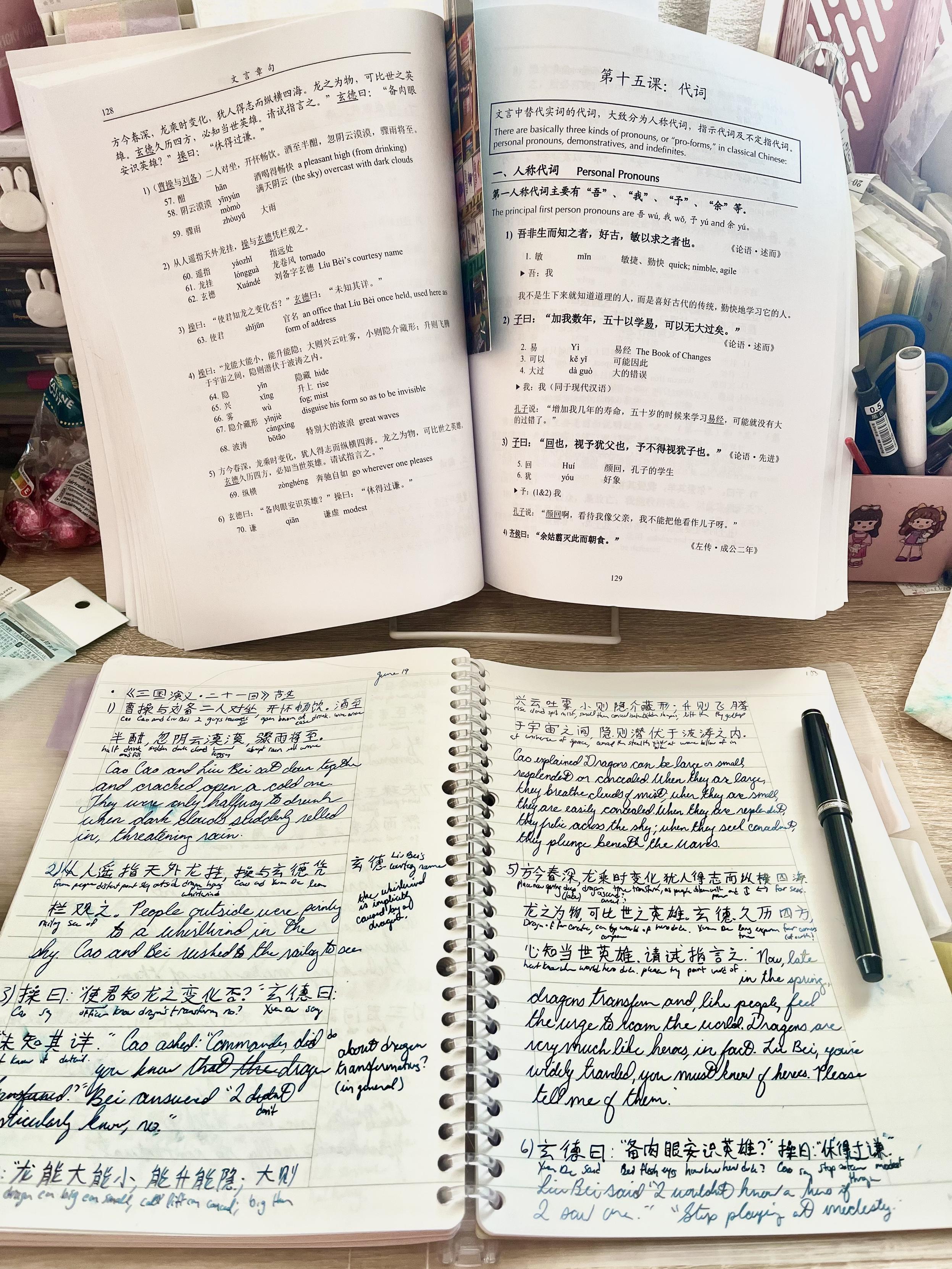
Make your own flash cards. Write your own notes. Ideally with pen and paper, but if that’s not an option, type it letter by letter or use speech-to-text. Don’t copy-paste. Don’t autocomplete. Don’t generate with AI. You need to use YOUR hands or YOUR voice if you want to change YOUR brain, YOUR own inner neural network weights.
I’ve been trying an Obsidian plugin called HiWords. You select a word, right click, and add a definition; from then on, that word will be highlighted in Obsidian notes, and you can hover to see your definition. Elegant, helpful, I like it.
They have a (completely optional, opt-in) functionality to shell out to an LLM for filling in the definition. I imagine that a lot of students requested this functionality, and it wasn’t hard to implement, so I understand why they added it. I can see why the students want it; it sounds so much more efficient, so much more ✨data✨ per effort to get the vocabulary collection up and running. But it’s self-defeating. It’s drowning your senses in noise that won’t stick in your memory. Two or three words you took the time to look up and write down yourself are vastly more helpful than a paragraph churned out by a machine.
Do it by hand, learn it by heart. 📓💖
#languagelearning #languages
 Mastodon Feed




 ]
]