Boosted by cstanhope@social.coop ("Your weary 'net denizen"):
dsalo@digipres.club ("Dorothea Salo") wrote:
Thank you, Cap Times, for writing an article on libraries that doesn't make me want to throw things.
This is why I support y'all yearly.
Boosted by cstanhope@social.coop ("Your weary 'net denizen"):
dsalo@digipres.club ("Dorothea Salo") wrote:
Thank you, Cap Times, for writing an article on libraries that doesn't make me want to throw things.
This is why I support y'all yearly.
Boosted by cstanhope@social.coop ("Your weary 'net denizen"):
david_chisnall@infosec.exchange ("David Chisnall (*Now with 50% more sarcasm!*)") wrote:
I am not a lawyer. I have studied IP law in various forms guided by solicitors, barristers, and professors of law of my acquaintance since I was a teenager (including reading through big piles of case histories and commentaries) but not in a formal setting (mostly I learned that I would rather invent the things in the patents than draft the patents, so changed career direction). I’ve also spent a surprising amount of my career talking to copyright and patent lawyers (almost never trademark or trade-secret specialists). I have enough of a lay-person’s understanding of the topic that I was able to spot that a clause in the contract from my US publisher was unenforceable in the state that they claimed jurisdiction because it hinged on an aspect of copyright law that the USA delegates to states and which the state in question did not have relevant laws. Their lawyers subsequently confirmed and fixed this. But I a not lawyer and this is not legal advice.
I have two objections to the EFF’s position on ‘AI’ model training. One is technical, one is social.
The technical one first.
Imagine I rip a DVD and transcode it to MPEG-4 video. This is lossy recompression. The new copy is not identical to the original. It is a derived work. There was no transformative step. Specifically, losing fidelity of reproduction is not a transformative step.
Video CODECs take advantage of redundancy. Simple CODECs build predictive patterns for redundancy in a single frame (for example, is this all one colour or a gradient? Store just that fact not every pixel). More complex ones look at the previous frame and compare it to the current one and use that redundancy. Most modern ones do this in both directions. Effectively, they create a cube of voxels, where one dimension is time, and try to find redundancy in the cube.
For copyright law, this doesn’t matter. Lossy compression is not a transformative step, no matter how complex the compression.
A lot of compression schemes (rarely for video, mostly because it doesn’t make sense for video unless you have a lot) also support special cases for large quantities of redundancy across a data set. For example, if you wanted to compress English Wikipedia with ZSTD, you would use the dictionary mode. It will come up with a list of the words (or even common phrases such as ‘citation needed’) and Huffman encode them so that each page has a short encoding for referencing them. This makes each page smaller than it would be if you compressed it individually.
Compressing Wikipedia like this is not a transformative step.
Now, imagine that you create a video compression CODEC that does this. You buy a copy of every DVD or BluRay disk available and compress them together such that you have a large dictionary of all common compressed sequences. Given a prefix of a film, each film in the input set would be reproducible with some loss of quality (not necessarily the same level of quality). Similarly, if you provided an initial vector that was not something in the training set then you’d get out video that might be similar to one of the inputs, might be similar to many, or might not be obvious to a human is close to either.
This is the crux of the argument. Deep neural networks are functionally equivalent to lossy compression schemes. The inference or generation step in ‘generative AI’ is an initial vector and a random seed that decompresses the data that might be there. If nothing from the training (input) set exactly matches (or if the random seed moves away from that path) then you’ll get something new, possibly something that’s recognisable as a lossily compressed version of the input data.
Note, in particular, that a lot of compression schemes now do take advantage of neural networks. They are one of the most efficient known ways of generating a specialised lossy compression scheme over arbitrary data. The law typically doesn’t care what specific technology an action uses, only about the outcome. In this case, that doesn’t matter: exactly the same underlying technology, used in exactly the same way, covers both ‘AI’ and compression. If one is legal then so is the other because they are the same process.
The EFF’s argument hinges on the idea that this lossy compression is a transformative step. Not only is that an idea that is not supported in case or statute law, there is case law that makes it clear that lossy compression of a work is not transformative.
Their argument would be internally self consistent if it also argued that Netflix does not owe royalties on any of the third-party videos it streams (and that they can buy BluRays on Amazon, recompress them, and then stream them without paying royalties). But there is so much case and statute law that this is not the case that they didn’t make this claim.
Instead, they tried to claim that this is permitted if you call the system ‘AI’ even though it is settled law that it is not permitted if you do not call the system ‘AI’.
Second, the social aspect. Copyright law in the USA draws its legitimacy from this line in the Constitution:
To promote the Progress of Science and useful Arts, by securing for limited Times to Authors and Inventors the exclusive Right to their respective Writings and Discoveries.
So does patent law. Patent law is more of a mess because the USA was founded just before James Watt bribed various MPs to subvert the patent system, but (due to later treaties) the modern US patent system inherits from that subversion (Watt, like Edison, was a bit of a dick).
This intent goes back to the invention of the printing press, where publishers made copies of books in large quantities without paying authors. This removed the incentive to write books. Allowing authors to control distribution rights put that incentive back. This short paragraph covers about a hundred years of the evolution of legal thought in this space, please forgive the many oversimplifications.
The EFF brief references this motivation but twists it. OpenAI and Anthropic are the equivalents of the post-Gutenberg printers. They are taking the work of creative individuals and producing output that competes directly with the products of those authors. This is precisely the situation that copyright law in the USA exists to prevent.
Yet the brief twists this to say that a lossily compressed duplication of original work is actually the kind of creativity that this was intended to cover.
This hinges on the idea that writing news, or other creative works, is a trivial commodity, whereas mechanically compressing them into a system that can lossily reproduce them is a key contribution to society.
Even if I agreed with their other arguments (I do not, I believe that they either misunderstand or deliberately misrepresent the technology and the relationship to other settled law), this is such a profoundly anti-human viewpoint. The idea that human creativity exists to feed poor-quality technological reproductions of that creativity is incompatible with any possible society that I would want to live in and I would struggle to find common ground with people who aim to create such a world.
ireneista@irenes.space ("Irenes (many)") wrote:
however, making it do anything useful requires some careful attention to the phases things are loaded in...
ireneista@irenes.space ("Irenes (many)") wrote:
the first part of this problem is easy: the hex transform's trap that runs when lexing a tilde (which introduces a comment) just needs to check whether it's in compile mode and do the other thing if not
ireneista@irenes.space ("Irenes (many)") wrote:
hmmm okay, so today's challenge with Evocation is that we're trying to make the magic comments work in interpreted code, not just compiled code
dysfun@treehouse.systems ("gaytabase") wrote:
christ, i have all sorts of opinions on technical things and people are just like yeah, whatever.
but god, don't taint linkin park with linkedin, that's geneva convention stuff.
Boosted by cstanhope@social.coop ("Your weary 'net denizen"):
Ulisu@mastodon.art ("Ulrich Suberg") wrote:
I was doing quick portrait drawings over the weekend at the local art event space/pub. All of the drawings yesterday were done from people on the street and they took their pictures home. Today, everyone at the space dressed up with medieval clothes and the volunteers and waitresses were sitting mostly. So I was able to at least take some pictures :D I had fun drawing.
#drawing #charcoaldrawing #portraitdrawing #portrait #art #imadethis #kunst #mastoart #fediart
happily I can restrain myself from anti-AI-doomer posting by just saying that my views have not changed on this in nearly 20 years and I've already posted about them. today's discourse is exactly as stupid as last year's. https://mastodon.social/@glyph/115076255020049089
Boosted by cstanhope@social.coop ("Your weary 'net denizen"):
CiaraNi@mastodon.green wrote:
'Hope in a hopeless time'
'Lift & listen'
The Pssst Postbox. You post a note about something hopeful for the world. Once a week, a local theatre group collects the post and records the messages. When you lift the letterbox flap, you hear the different messages of hope being read by children & adults. Nice project. I heard someone wishing for more social projects; someone feeling hopeful because more people are adopting better climate habits; and someone encouraging everyone to dance.
Boosted by glyph ("Glyph"):
nixCraft ("nixCraft 🐧") wrote:
Nvidia dismisses "circular financing", says every $1 it invests brings back $100 https://invezz.com/news/2026/09/11/nvidia-says-every-1-it-invests-brings-back-100-so-why-does-the-stock-keep-falling/
So I asked my friend who is investing banker and works at bank and he said if $1 brings back $100 that is even bigger red flag. I asked him how? He said and I quote: "a 100× return is a 9900% profit on the original $1. So it cannot sustainably produce enormous returns with little or no risk. That is not how it works."
So me thinks: it is a huge risks & a major warning sign. Crash is ahead,
dysfun@treehouse.systems ("gaytabase") wrote:
linkedin park
Boosted by cwebber@social.coop ("Christine Lemmer-Webber"):
dragon@lesbian.solutions ("the swagon") wrote:
Baking bread is awesome I took my loaf out and a choir of angels came down from the heavens
Boosted by cwebber@social.coop ("Christine Lemmer-Webber"):
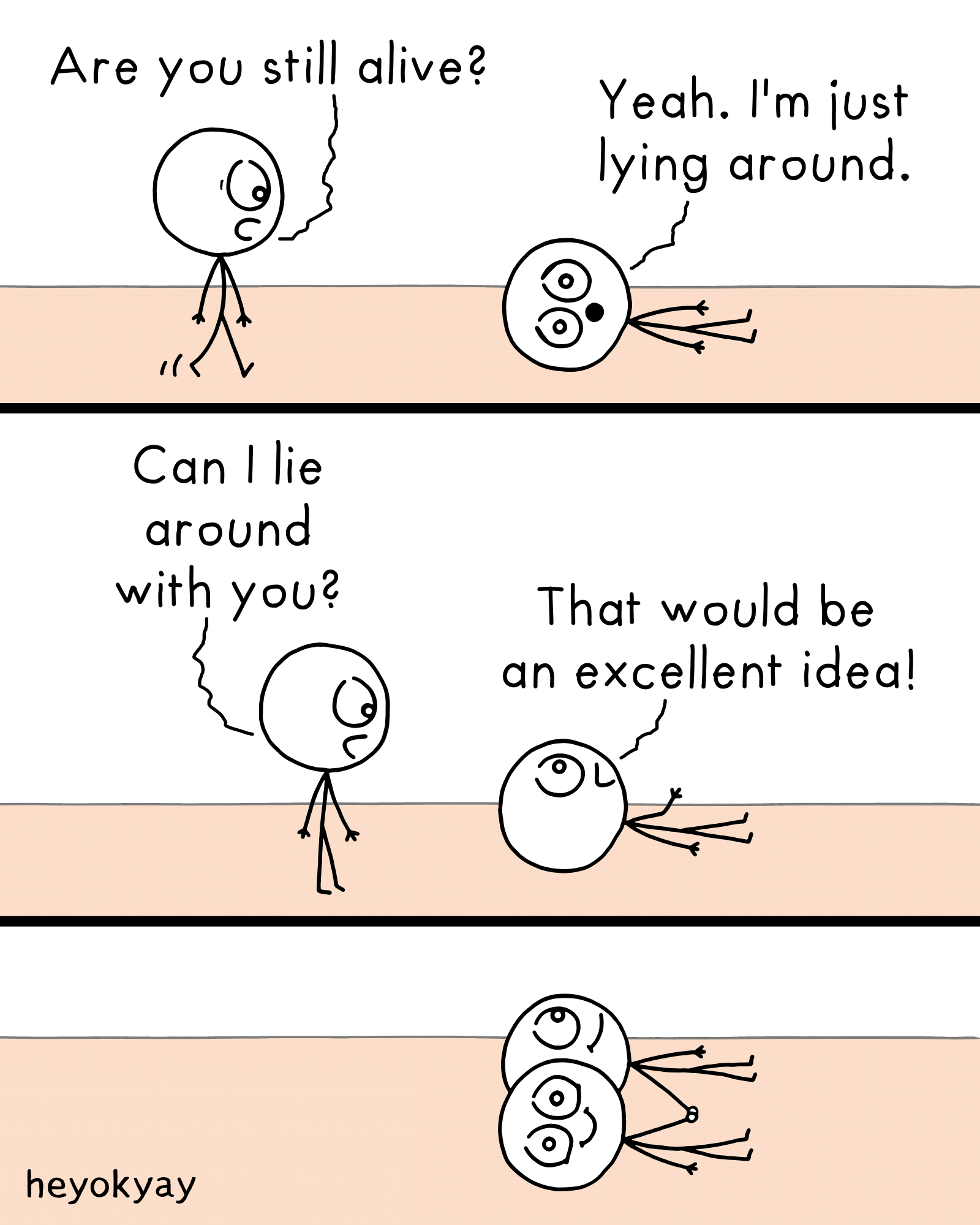
heyokyay wrote:
Boosted by cwebber@social.coop ("Christine Lemmer-Webber"):
animalculum@scholar.social ("Lukas VFN 🇪🇺") wrote:
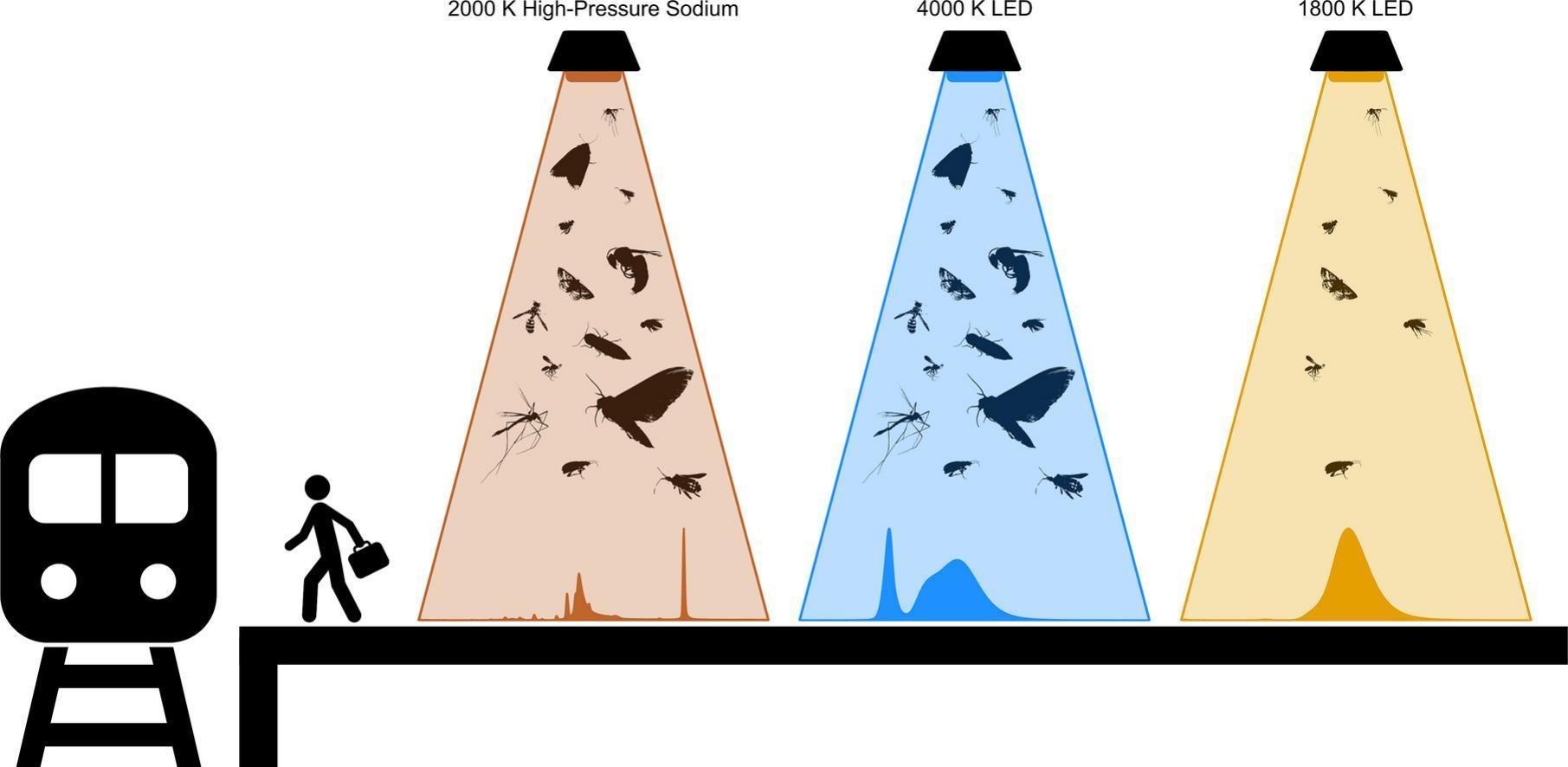
New Lighting at Train Stations Reduces Light Stress for Insects https://leibniz-lib.de/en/news/11092026-new-lighting-at-train-stations-reduces-light-stress-for-insects.html Paper by Carmen Ludreschl et al.: https://www.sciencedirect.com/science/article/pii/S0006320726002764
"The amber-coloured 1800 K LED attracted significantly fewer #insects than the current standard (cool white 4000 K LED) and the old high-pressure sodium lamps (2000 K)... #DeutscheBahn has already responded to the findings: all the platforms studied, as well as one additional station, have been permanently converted to the new LEDs."
Via @gkalinkat
Boosted by cwebber@social.coop ("Christine Lemmer-Webber"):
dinchenix@mastodon.art ("Dinchen") wrote:
"It's the legend from children stories, it's the Cloud Eater Dinosaur!" 🦕🌅
#pixelart #dinchenix #ドット絵
Boosted by glyph ("Glyph"):
itamarst@hachyderm.io ("Itamar Turner-Trauring") wrote:
@glyph Turns out many current Chinese local government projects are motivated by the exact same reason Google (and suchlike megacorps) employees create Yet Another Chat Project.
https://mccourt.georgetown.edu/news/how-businesses-in-china-serve-the-state/
Boosted by dystroy@mastodon.dystroy.org ("Denys Séguret"):
cam@efdn.club ("Cam") wrote:
cwebber@social.coop ("Christine Lemmer-Webber") wrote:
Now now, don't go screaming about your children. Broaden your horizons a bit!
After all, isn't your and your family's sacrifice the greatest contribution to humanity's children you could possibly offer?
cwebber@social.coop ("Christine Lemmer-Webber") wrote:
Your family? Don't worry about them. We've found that it's best for social cohesion to take entire families as a group. Rest assured that you'll be reunited with your family soon.
cwebber@social.coop ("Christine Lemmer-Webber") wrote:
Now now, we hear you objecting. Now don't let those thoughts of "murder" enter your brain, that's hardly fair. Motivated to terminate you due to your active research on the environmental effects of model training? We assure you, modern labs take environmental concerns *very seriously*. Given climate change, we've even been able to position active scanning as a form of carbon offsetting. We're pleased to announce: scanning has allowed our labs to become fully carbon neutral!
cwebber@social.coop ("Christine Lemmer-Webber") wrote:
Don't think of it as death, think of it as a chance to achieve a kind of immortality! You'll be averaged with some of the rest of the best minds of your generation. And occasionally, at the whims of the labs, you may even be revived fully independently in a simulated environment! We anticipate your consciousness will live on for decades, perhaps centuries, or even millennia, to come!
cwebber@social.coop ("Christine Lemmer-Webber") wrote:
Unfortunately, the process of scanning *is* destructive. We have to slice off delicate layer by layer in the neural scan. This is a big project, and the only way to efficiently process as many minds at scale! However, we assure you that we have only the best biochemists on staff; the serum you will be administered will make sure you are in the happiest state when being scanned. (We have learned from early attempts without sufficient medication; full sedation means a loss of quality of connection fidelity in the model, and scanning without medication at all would lead to traumatic contamination of the model's usefulness.)
cwebber@social.coop ("Christine Lemmer-Webber") wrote:
Congratulations! Based on your wonderful and unique contributions to society, you have been selected to train the model. This is a real honor!
As you know, the government has partnered with the frontier labs to enhance our datasets to better resemble some of our most powerful thinkers in the field. We're delighted to tell you, this includes you!
cwebber@social.coop ("Christine Lemmer-Webber") wrote:
Here's the story also below, as a 🧵!
cwebber@social.coop ("Christine Lemmer-Webber") wrote:
Thank you for your contribution to the model https://dustycloud.org/blog/thank-you-for-your-contribution-to-the-model/
A piece of short science fiction.
neatnik@social.lol ("Neatnik :prami:") wrote:
*Everything* can be accessible.
Boosted by pixxl:
Hex@kolektiva.social ("hex") wrote:
Let's actually talk about the "AI destroying the world" thing. One specific apocalypse scenario is the "paperclip maximizer" problem. The scenario goes that a super intelligence is tasked with maximizing the number of paperclips produced by a company. Because of a thing called "instrumental convergence," the AI kills all humans to prevent them from shutting it down, then it destroys everything else strip mining the Earth, etc.
Basically, the intelligence doesn't understand the actual goal of helping people hold paper together and therefore calculates intermediate goals that violate the *implicit* goal in order to fulfill the *explicit* goal.
The thing is, that's just capitalism. The whole AI scam is an example of this, where maximization of quarterly profit is an explicit goal and "destroying human civilization and most life on Earth through climate change" is a side effect of the "build as many datacenters as possible" subgoal.
Capitalism has been an apocalypse manifesting malicious intelligence since we figured out that burning fossil fuels changes the climate, back in 1824.
But in following the AfD victory recently, hearing people describing the small "kingmaker" BSW where a far-"left" splinter group that might anoint the AfD with a ruling majority, whose platform is populism, nationalism, and xenophobia, combining authoritarian centralized economic policy with nativism… like a sort of *national* socialism, one might say… I feel like we're about to repeat a *lot* of mistakes from the mid-20th century, potentially very quickly
My normal feeling on this sort of discourse is that this is like complaining about getting water stains on the hardwood floors while the house is burning down, we need a BIG swing to the left and it's probably going to take a generation to get as far as we need to go, we do not need anybody pushing in a progressive direction to "moderate" even a tiny bit right now
This is where my executive function is these days, I guess, unable to even follow the instructions on the "DEAD DISCOURSE, *DO NOT EAT*" bag in the fridge full of 90-year-old ML/Anarchist debates.